DOPO-NQ Modified Phenolic Epoxy Resin: Blend Ratio Guide
Oct 16, 2026
DOPO-NQ modified phenolic epoxy resin is a halogen-free, phosphorus-bearing flame-retardant epoxy resin supplied as the solid grades YLDP-3300 and YLDP-3375. The two grades cover 280-320 and 350-400 g/eq at softening points of 40-50 and 55-65 °C, and the blend mathematics is set out below in detail.
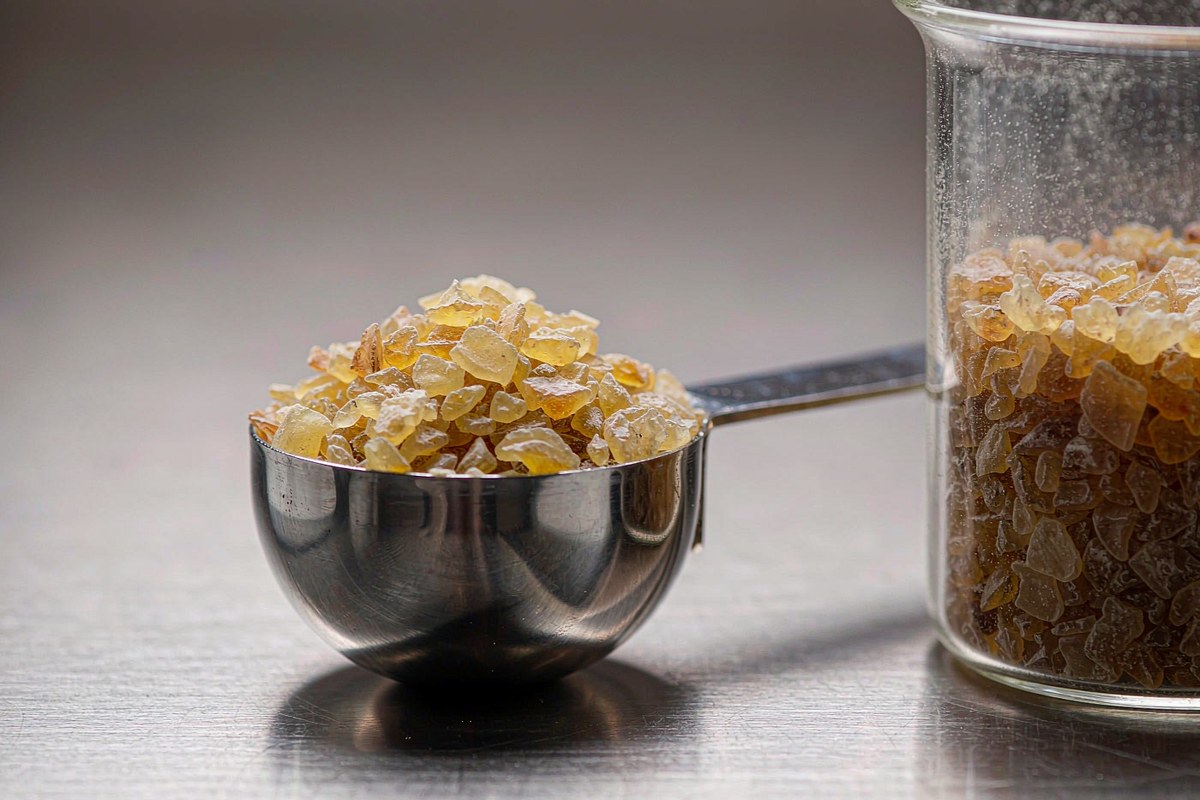
Figure 1. The DOPO-NQ grades are solid resins; the flake form shown is illustrative, since no appearance entry is published on the product page.
1. Introduction
Electronics laminates are moving away from bromine, and the chemistry that replaces it has to be reactive rather than additive. DOPO-based epoxy resins are the main reactive-phosphorus route, and the DOPO-NQ product page calls the family one of the most probable alternatives to halogen-containing flame retardants.
Three derivatives share the family: DOPO-HQ modified, DOPO-NQ modified and plain DOPO modified grades. The NQ and HQ suffixes denote the naphthoquinone- and hydroquinone-derived DOPO adducts; that is nomenclature, not a published specification, so the TDS is the final word.
Both DOPO-NQ grades are solids, softening at 40-50 °C for YLDP-3300 and 55-65 °C for YLDP-3375. That fact shapes everything downstream: how the resin is melted, what varnish solids a line reaches, and how the blend is dosed.
This report works through that math, on public page values plus marked calculations.
2. Materials and Methods: Identification of the DOPO-NQ Modified Phenolic Epoxy Resin Grades
Table 1 collects every specification item the product page publishes for the two grades.
2.1 Product Identification and Specification
Table 1. Identity and published specification of the DOPO-NQ modified phenolic epoxy resin grades.
Item
YLDP-3300
YLDP-3375
Epoxy equivalent weight
280-320 g/eq
350-400 g/eq
Softening point (published as Viscosity, SP/°C)
40-50 °C
55-65 °C
Hydrolyzable chlorine
1000 ppm
1000 ppm
Appearance, phosphorus content, CAS No.
Not published
Not published
Packaging
Drum package
Drum package
Shelf life
12 months minimum
12 months minimum
Both grades share the drum packing, the storage wording and the 12 month minimum shelf life. The chlorine figure is listed without a maximum or typical label.
2.2 Test Methods and Data Sources
The EEW windows are oxirane titration results; ASTM D1652 and ISO 3001 are the standard routes behind such figures, and the COA of the delivered lot overrides the catalogue range. The softening points sit under a column headed Viscosity, SP/°C (see 7.1).
Hydrolyzable chlorine is listed without a method name. Water content, where a blend needs it, is determined by Karl Fischer titration under ASTM E203.
Incoming checks are normally run in duplicate, or as n = 3 determinations when a lot feeds a qualification.
3. Results and Discussion: Solid Form, Softening Point and the Reactivity Budget
The published numbers define a solid, mid-EEW, reactive-phosphorus resin family, and every processing decision follows from those three facts.
3.1 What the DOPO-NQ Backbone Does
The DOPO unit is a bicyclic phosphaphenanthrene oxide whose P-H bond adds across double bonds and carbonyl groups; naphthoquinone is one standard partner. Bonded this way, the phosphorus sits inside the epoxy backbone instead of migrating like an additive.
Within the pair, the higher EEW grade also carries the higher softening point: 350-400 g/eq with 55-65 °C against 280-320 g/eq with 40-50 °C. The consistent direction points to different molecular weights.
3.2 Comparison with Alternative Flame-Retardant Epoxy Systems
Table 2 puts the two DOPO-NQ grades beside a DOPO-HQ solid grade, a DOPO-modified solution grade and a brominated resin.
Table 2. Property comparison of the DOPO-NQ grades with DOPO-HQ, DOPO-modified solution and brominated alternatives (published values).
Property
YLDP-3300 / YLDP-3375
YLDP-320 (DOPO-HQ)
YLDP-315-M75 (solution)
YLEB-300-K75 (brominated)
Form at 25 °C
Solid, SP 40-50 / 55-65 °C
Solid, SP 70-85 °C
Solution, 1000-3000 mPa·s at 25 °C
Solution, 200-1500 mPa·s
Epoxy equivalent weight
280-320 / 350-400 g/eq
300-340 g/eq
295-335 g/eq
280-320 g/eq
Hydrolyzable chlorine
1000 ppm
500 ppm maximum
Not published
Not published
Non-volatile content
Not published
99.0% minimum
75±1%
75±1%
Flame-retardant element
Reactive phosphorus
Reactive phosphorus (3.0%)
Reactive phosphorus
Reactive bromine
Against the DOPO-HQ grade YLDP-320, the NQ grades are softer solids that melt about 30 °C earlier, at the cost of a chlorine figure twice as high.
Against the brominated brominated epoxy resin YLEB-300-K75, the swap is chemical rather than thermal: bromine leaves and bonded phosphorus enters. Whether that pays depends on the rating target and the customer's certification documents.
The trade-off is real.
4. Formulation and Dosage Calculation for DOPO-NQ Modified Phenolic Epoxy Resin
Laminates rarely run the DOPO resin alone. The usual start is a blend with a liquid bisphenol A epoxy resin YLE-128, published at 184-190 g/eq, and dicyandiamide as the hardener.
Blend EEW = (100 + d) ÷ (100 ÷ EEW of the base resin + d ÷ EEW of the DOPO-NQ grade), with d in phr. Hardener demand follows phr = 100 × AHEW ÷ blend EEW. Dicyandiamide has a theoretical AHEW of 21.0 g/eq, calculated from 84.08 g/mol and four active hydrogens.
Table 3 works the example with YLDP-3300 at 300 g/eq in a base resin at 187 g/eq. The chlorine column counts only the DOPO-NQ component at 1000 ppm.
Table 3. Blend EEW, dicyandiamide demand and resin mass per equivalent for YLDP-3300 loadings in a base resin at 187 g/eq (calculated).
YLDP-3300 loading, phr
Blend EEW, g/eq
DICY demand, phr
Resin mass per equivalent, kg/eq
Chlorine contribution of the component, ppm
0
187.0
11.2
0.187
0
20
199.5
10.5
0.200
167
40
209.6
10.0
0.210
286
60
217.8
9.6
0.218
375
100
230.4
9.1
0.230
500
The blend EEW rises with every added part, so hardener demand falls from 11.2 to 9.1 phr; that is the opposite direction to a low-EEW reactive diluent, and it is easy to get backwards when copying a diluent recipe.
The mass column is the cost reading: each kilogram of YLDP-3300 buys fewer epoxy equivalents than a kilogram of base resin. Whether that pays depends on what the phosphorus buys back in the laminate.
The chlorine column is the reliability reading: a 40 phr loading contributes about 286 ppm before base resin, hardener and catalyst add theirs. For high-reliability boards the figure belongs in the incoming specification, and a tight budget favors the DOPO-HQ grade at 500 ppm maximum.
Dosage is a trade-off, not a constant.
5. Processing Notes and Operating Window
The operating window is set by the softening points, and the grades differ by 15 °C.
Melting: YLDP-3300 softens at 40-50 °C, so a jacketed vessel is usually enough; YLDP-3375 needs 55-65 °C and a longer melt. Avoid holding the resin far above its softening point, because color and EEW can drift.
Dissolving: add solvent in portions and check viscosity after each. The sibling solution grades run at 70-75% solids, a workable anchor, but the reachable solids here is not published; confirm on the TDS.
Humidity: the page says to close the cap tightly after each use. A drum left open in a humid shop picks up water, which shifts the stoichiometry and shows up later as blush or soft cure.
Filtration: melt, homogenize and filter before impregnation; a solid grade can carry packaging traces.
Cure: dicyandiamide systems typically cure in a press at elevated temperature. The schedule depends on the accelerator package, so run a gel-time check before locking a batch size.
Figure 2. Solid resin is charged into a heated vessel and dissolved before the hardener stage.
6. Applications of the DOPO-NQ Modified Phenolic Epoxy Resin Grades
The product page lists three applications, all laminate-side. Table 4 links each to what the resin contributes and what to verify.
Table 4. Applications listed on the product page and the verification point for each.
Application
Role of the resin
Verification point
Halogen-free flame-retardant printed circuit substrates
Bonded phosphorus replaces bromine in the laminate
Flame rating on the customer's own laminate panels
Electronic copper-clad laminates
Solid grade melted into varnish for impregnation
Varnish solids and viscosity measured at line temperature
Electrical laminates
Heat resistance and low water absorption from the aromatic backbone
Water uptake and flex properties after cure
All three run through the same impregnation logic: melt or dissolve, mix with hardener, wet the fabric, press. Inside the pair, the choice is a softening-point decision.
Figure 3. Copper-clad laminate panels, the second application listed on the product page.
7. Limitations and Material Verification
7.1 Known Limitations and Unsuitable Cases
Appearance, phosphorus content, CAS number, chemical name and molecular weight are all absent from the page, so documents that require a CAS entry cannot be filled from it. The TDS, MSDS and COA govern.
The parameter table labels the third column Viscosity (SP/°C) while the unit is °C and the values rise with grade. Read as published, those are softening points, not viscosities; confirm on the TDS before copying the row into a drawing.
Not the right grade when the process needs a room-temperature liquid, when a published CAS number is required, or when the chlorine budget sits below 1000 ppm and the DOPO-HQ grade fits instead.
Swapping between the two grades, or between NQ and HQ chemistry, changes both stoichiometry and melt step; requalification is the honest path.
7.2 Incoming Inspection, Packaging, Storage and Safety
A workable incoming panel is EEW by oxirane titration, softening point, hydrolyzable chlorine titration and water by Karl Fischer titration, run in duplicate or as n = 3.
The page states drum package and at least 12 months from manufacture in the original packing at ambient temperature, stored well-ventilated away from flames and direct sunlight.
Safety handling follows the Material Safety Data Sheet. Statements about REACH, RoHS or UL 94 belong to the certificate that ships with the lot; a catalogue page is not a certificate.
8. Frequently Asked Questions
What is DOPO-NQ modified phenolic epoxy resin?
It is the naphthoquinone-derived branch of the family: solid grades YLDP-3300 and YLDP-3375, EEW 280-320 and 350-400 g/eq, softening points 40-50 and 55-65 °C.
Why does the table show a temperature, not a viscosity?
The column is published as Viscosity (SP/°C), yet the values carry the unit °C and scale with grade, which is softening-point behavior; the TDS wording governs.
What happens to the hardener dosage when YLDP-3300 is blended into a bisphenol A resin?
The blend EEW rises rather than falls. At 40 phr in a resin at 187 g/eq the blend EEW reaches about 210 g/eq and the dicyandiamide demand drops from 11.2 to 10.0 phr.
How much hydrolyzable chlorine does the DOPO-NQ component add to a blend?
The grades are listed at 1000 ppm. At 40 phr the component contribution works out to about 286 ppm, which is why the figure belongs in the incoming specification.
Is a phosphorus content published for YLDP-3300 and YLDP-3375?
No. Neither grade carries a phosphorus entry, unlike the DOPO-HQ grade at 3.0%, so loading has to be set from the COA of the delivered lot.
What should incoming inspection of a DOPO-NQ lot cover?
EEW by titration, softening point, hydrolyzable chlorine and water by Karl Fischer titration, in duplicate as a minimum. Drum package and a 12 month minimum shelf life are also specified.
9. Conclusions
The published record is short but usable: EEW 280-320 and 350-400 g/eq, softening points 40-50 and 55-65 °C, hydrolyzable chlorine at 1000 ppm, drum package and a 12 month minimum shelf life.
Blended into a bisphenol A base resin, the grades raise the blend EEW and cut the dicyandiamide demand from 11.2 toward 9.1 phr. The missing phosphorus value comes from the COA.
Treat the pair as a softening-point choice, dose on the blend stoichiometry, and anchor the unpublished items to the current TDS, MSDS and COA.
10. References
1. DOPO-NQ modified phenolic epoxy resin, product page, Yolatech. https://www.yolatech.com/dopo-nq-modified-phenolic-epoxy-resin (accessed 2026-10-16).
2. DOPO-HQ modified phenolic epoxy resin YLDP-320, product page, Yolatech. https://www.yolatech.com/dopo-hq-modified-phenolic-epoxy-resin-yldp-320
3. DOPO modified phenolic epoxy resin, solution grades, product page, Yolatech. https://www.yolatech.com/dopo-modified-phenolic-epoxy-resin
4. Brominated epoxy resin grades YLEB-265 to YLEB-425S, product page, Yolatech. https://www.yolatech.com/brominated-epoxy-resin
5. Technical Data Sheet, Material Safety Data Sheet and Certificate of Analysis for the two DOPO-NQ grades, Yolatech, available on request.
6. ASTM D1652 and ISO 3001, titration routes behind the published epoxy equivalent weights.
7. ASTM E203, Karl Fischer titration for water content on incoming lots.
Read More






 IPv6 network supported