1,5-Pentanediamine (PDA): A Bio-Based Aliphatic Diamine for Advanced Polymer and Epoxy Applications
Jul 15, 2026
Product Code: PDACAS No.: 462-94-2Product Category: Linear Aliphatic Diamine / Bio-based Polyamide Monomer / Epoxy Curing Agent Raw Material
1. Product Information
Item
Information
Chinese Name
1,5-戊二胺
English Name
1,5-Pentanediamine
IUPAC Name
Pentane-1,5-diamine
Abbreviation
PDA
Synonyms
1,5-Diaminopentane; Pentamethylenediamine; Cadaverine
CAS No.
462-94-2
Molecular Formula
C5H14N2
Molecular Weight
102.18 g/mol
Product Category
Linear aliphatic diamine; bio-based polyamide monomer; epoxy curing agent raw material / modified hardener raw material
2. Product Description
1,5-Pentanediamine (PDA) is a five-carbon linear aliphatic diamine containing two primary amino groups. Due to its high amine reactivity, PDA can react with carboxylic acids, anhydrides, epoxy groups and isocyanates. It is an important intermediate for polyamides, polyurethanes, epoxy curing systems and various fine chemicals.
In material applications, PDA can be used as a bio-based polyamide monomer for PA56, PA510 and related materials. It can also be used for preparing or modifying epoxy resin curing agents. Compared with aromatic amines, PDA is an aliphatic diamine with higher reactivity and is often used in systems requiring fast reaction, flexible chain segments or bio-based material concepts.
3. Structural Features and Reactivity
The structure of PDA can be represented as H2N-(CH2)5-NH2. Its linear chain and two primary amino groups determine its typical aliphatic amine reactivity.
• Two primary amino groups: react with epoxy groups to form crosslinked networks and react with dicarboxylic acids to form polyamide salts for further polymerization.
• Five-carbon linear chain: introduces flexible chain segments into polymers and may help improve toughness and processing adaptability.
• High reactivity: in epoxy systems, PDA generally cures rapidly; pot life and exotherm should be carefully evaluated in formulation development.
• Bio-based development potential: PDA can be produced through bio-fermentation routes and is an important monomer in the bio-based polyamide value chain.
4. Key Advantages
• High reactivity for polyamide polycondensation, epoxy curing and isocyanate derivative preparation.
• Low-molecular-weight aliphatic diamine, which can increase reaction efficiency and crosslink density; curing speed should be controlled in epoxy formulations.
• Good water solubility and solvent compatibility for various synthesis systems.
• Suitable for bio-based material development, including bio-based nylon, engineering plastics, fibers and films.
• Broad application scope covering polyamides, polyurethanes, epoxy curing agents, pharmaceutical/agrochemical intermediates and organic synthesis intermediates.
5. Technical Data
Item
Typical Value
Appearance
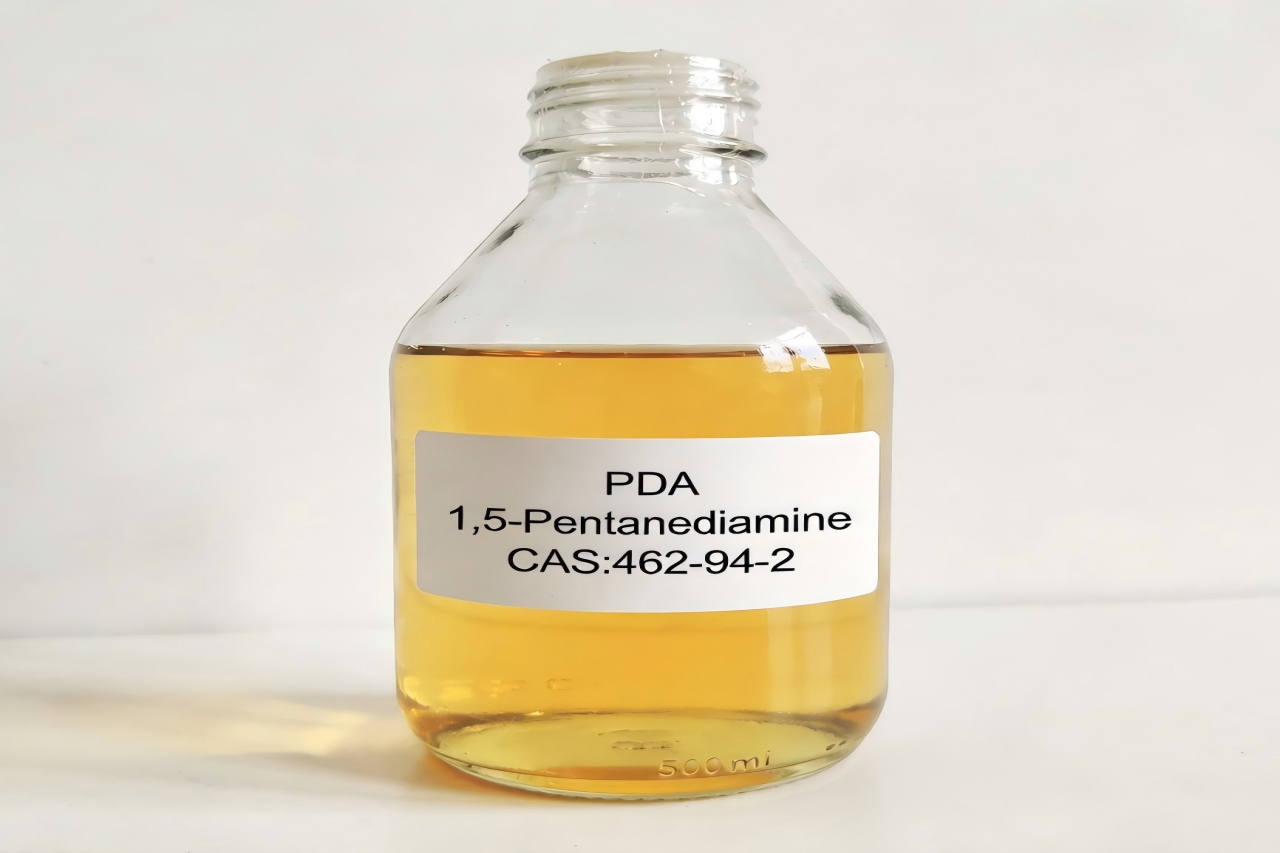
Colorless to yellow liquid with characteristic amine odor
CAS No.
462-94-2
Molecular Formula
C5H14N2
Molecular Weight
102.18 g/mol
Melting Point
Approx. 9°C
Boiling Point
178-180°C
Density
Approx. 0.873 g/mL at 25°C
Flash Point
Approx. 63°C / 145°F
Water Solubility
Soluble
Sensitivity
Air sensitive & hygroscopic
Note: The above values are typical data from public references and do not constitute product specifications. Final quality specifications should follow the company TDS, COA or contract agreement.
6. Main Applications
1. Bio-based Polyamide Monomer
PDA is an important diamine monomer for bio-based polyamides. It can react with dicarboxylic acids such as adipic acid and sebacic acid to produce PA56, PA510 and related polyamide materials. These materials can be used in fibers, engineering plastics, films, hot-melt adhesives and functional materials.
2. Epoxy Resin Curing Agent and Modified Hardener Raw Material
PDA contains two primary amino groups and can react with epoxy resins to form crosslinked structures. Due to its high reactivity, pot life, exotherm and application window should be evaluated when PDA is used directly in epoxy systems. In industrial applications, it can also be used as a raw material for modified amine curing agents or blended hardener systems for coatings, adhesives and composite materials.
3. Polyurethane and PDI-related Raw Material
PDA can be used as a five-carbon diamine raw material for developing pentamethylene diisocyanate (PDI) and related polyurethane systems, including high-performance coatings, elastomers and adhesives.
4. Organic Synthesis Intermediate
PDA can also be used in pharmaceuticals, agrochemicals, surfactants, chelating agents and other fine chemical synthesis fields.
7. Packaging, Storage and Safety
Packaging: Common packaging forms may include drums or IBC tanks. Actual packaging should follow the company specification and sales contract.
Storage: Keep the container tightly closed in a cool, dry and well-ventilated place. Avoid heat, direct sunlight, and long-term exposure to air and moisture. Keep away from acids, strong oxidants and incompatible materials.
Safety: PDA is a corrosive amine chemical. It may cause severe skin burns and eye damage and may cause respiratory irritation. Wear protective gloves, safety goggles and protective clothing, and ensure adequate ventilation during handling. Refer to MSDS for detailed safety information.
8. Data Note
This document is prepared for internal product database and foreign trade development reference. Since the company TDS/MSDS/COA was not provided for this product, technical values are organized from public chemical references. External quotation, sample communication and contract documents should follow the official company TDS, MSDS and COA.
Read More






 IPv6 network supported