Styrenated Phenol MSP-250: Nonylphenol-Free Epoxy Modifier
Oct 27, 2026
Styrenated phenol MSP-250 is a colorless to pale yellow phenolic liquid with a hydroxyl value of 230-260 mg KOH/g and a viscosity of 300-800 mPa.s at 25 C. It is used at 1.0-3.0 phr to replace restricted nonylphenol in amine and anhydride epoxy systems. Grade data, dosage maths and limits are shown.
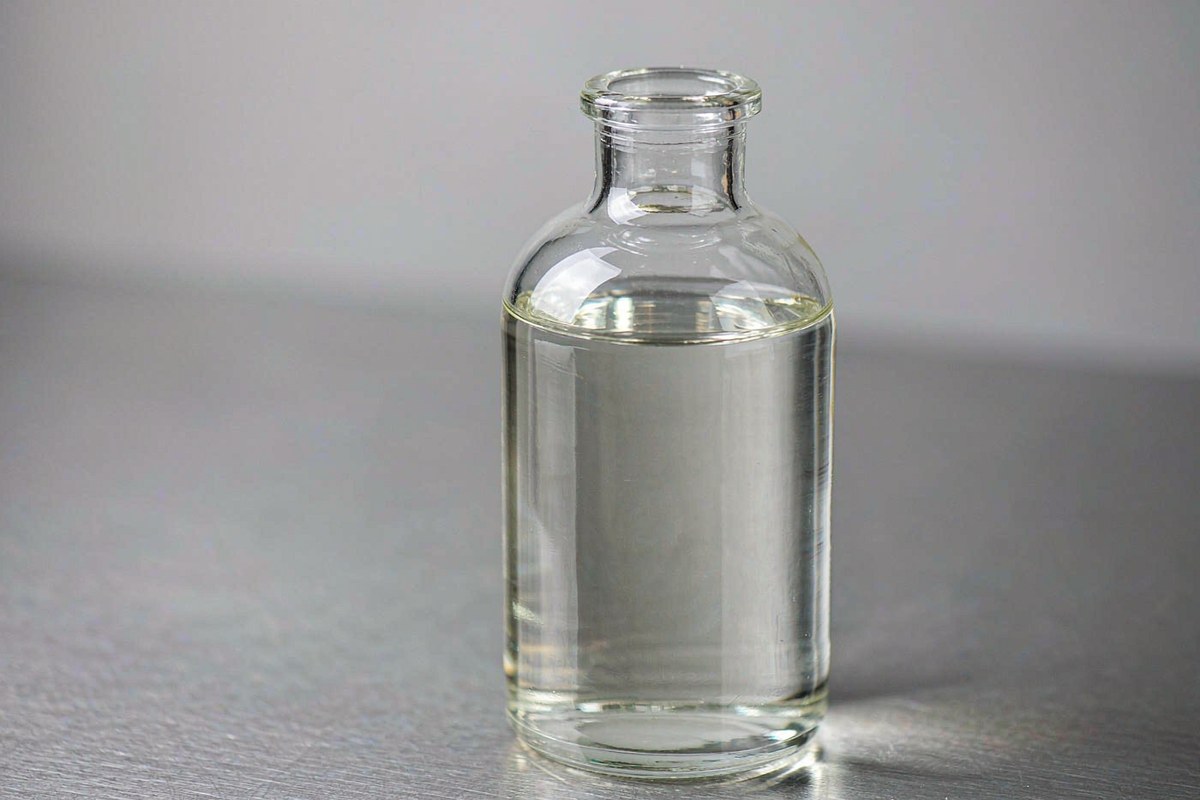
Figure 1. MSP-250 as supplied: a low-viscosity phenolic liquid that pours at room temperature.
1. Introduction: Why Nonylphenol Substitution Is a Formulation Problem
Nonylphenol has done three jobs in amine-cured epoxy for decades: it cuts viscosity, it accelerates the cure, and it dissolves in almost anything. A replacement has to keep the cure profile and the flow behaviour, not just the label.
Styrenated phenol comes from the same family: acid-catalysed alkylation of phenol with styrene gives a mono- to hepta-styrenated mixture, and one phenolic hydroxyl survives. MSP-250 is the Yolatech grade, and its published hydroxyl value of 230-260 mg KOH/g sits close to nonylphenol on an equivalent basis.
This report separates measured from calculated values, then works through the regulatory position and the dosing arithmetic. Numbers stop where the MSP-250 product page stops.
2. Materials and Methods: Styrenated Phenol MSP-250 Grade Data
2.1 Product Identification and Published Specification
Table 1 puts identity and specification on one screen. Values marked calculated are arithmetic from the published hydroxyl value.
Table 1. Identity and published specification of styrenated phenol MSP-250.
Item
Value and basis
Chemical identity
Styrenated phenol, mono- to hepta-styrenated mixture, one phenolic hydroxyl per molecule
CAS No.
61788-44-1 (phenol, styrenated) per the site keyword block; the page intro prints 462-94-2, which is 1,5-diaminopentane. Confirm on the SDS and COA.
Appearance
Colorless to light yellow liquid
Hydroxyl value
230-260 mg KOH/g (published)
Hydroxyl equivalent
216-244 g/eq, calculated as 56100 / hydroxyl value
Viscosity
300-800 mPa.s at 25 C (published)
Water
0.50 % maximum (published)
Purity line
Printed as 2 % maximum, basis not stated; treat as unconfirmed until the TDS defines it
Solubility
Soluble in ethanol, acetone, benzene, toluene, trichloroethane; insoluble in water
Dosage and packing
1.0-3.0 parts per 100 parts resin; 25 kg, 200 kg and 1000 kg drums; 12 months shelf life
2.2 Test Methods and Data Sources
Nothing in Table 1 was measured for this report. Table 2 gives the basis of each value and the method on re-test.
Table 2. Basis of each published value and the method to request on re-test.
Property
Status
Method to quote
Hydroxyl value
Published window
Method stated in the current TDS; not named on the page
Viscosity
Published at 25 C
Rotational spindle, measured at 25 C; ASTM D445 is kinematic and not interchangeable
Water
Published maximum
ASTM E203, Karl Fischer titration
Flash point
Not published
ASTM D93, Pensky-Martens closed cup; ask for the figure
3. Results and Discussion
3.1 How One Phenolic Hydroxyl Becomes a Chain End
The phenolic hydroxyl opens an epoxide ring and stays bonded to the network as a beta-hydroxy ether. That much is covalent. It is not a crosslink.
Each molecule carries one hydroxyl, so reaction with a diepoxide caps a chain end instead of joining two chains, and crosslink density falls with dose. The page calls this covalent crosslinking; a monofunctional phenol cannot deliver that. Three other effects explain the reported benefits.
The phenol hydrogen-bonds the amine hardener and speeds epoxide opening, so gel time shortens and peak exotherm can rise. The styryl group lowers blend viscosity without volatile solvent. The aromatic ring absorbs UV, the usual explanation for color retention at 60 C.
3.2 Styrenated Phenol, Nonylphenol and Benzyl Alcohol Compared
Table 3 sets styrenated phenol against the two liquids it most often replaces. Equivalent weights are calculated, so the dose column compares like with like.
Table 3. Styrenated phenol MSP-250 against nonylphenol and benzyl alcohol.
Property
MSP-250
Nonylphenol
Benzyl alcohol
Hydroxyl equivalent
216-244 g/eq
about 255 g/eq, calculated
about 108 g/eq, calculated
Network effect
Chain cap, slight plasticizing
Chain cap, slight plasticizing
Non-reactive plasticizing
Color at 60 C
Reported better after 3 days
Reference
Good, volatile loss
REACH entry 46
Not listed
Listed, 0.1 % w/w limit
Not listed
Typical dose
1.0-3.0 phr
1.1-3.3 phr at equal hydroxyl
2-6 phr
The regulatory column gets misread. Annex XVII entry 46 covers nonylphenol and its ethoxylates at 0.1 % w/w or above in named uses: industrial and domestic cleaning, textile and leather processing, metal working, pulp and paper, cosmetics, and co-formulants in pesticides. Coatings and adhesives are not on that list, so the pressure on a paint formulator arrives through a customer declaration or a brand restricted substance list.
The grade is not restricted under that entry. That is a fact about the entry, not a safety verdict. Where a bio-based phenol is preferred, cardanol glycidyl ethers cover a different part of the decision.
4. Formulation and Dosage Calculation: from phr to Epoxide Consumption
Three lines of arithmetic cover most substitution cases, but the right dose depends on the hardener and the filler load.
EEW(OH) = 56100 / hydroxyl value, so 230-260 mg KOH/g gives 216-244 g/eq. At 3 phr, n(OH) = 3 / 230 = 0.013 eq. A bisphenol A epoxy resin at EEW 185 g/eq holds 0.541 eq of epoxide per 100 g, so the phenol consumes 2.4 % of it.
Table 4. Epoxide consumption at published dose levels, resin EEW 185 g/eq.
MSP-250 dose
Hydroxyl added
Epoxide present
Consumed
1.0 phr
0.0043 eq
0.541 eq
0.8 %
3.0 phr
0.0130 eq
0.541 eq
2.4 %
5.0 phr
0.0217 eq
0.541 eq
4.0 %
3.3 phr nonylphenol
0.0129 eq
0.541 eq
2.4 %
A 3.3 phr nonylphenol dose supplies 0.0129 eq; the same figure from MSP-250 needs 3.0 phr, because its equivalent weight is lower. Swapping by mass leaves the phenol side under-dosed, and the slower cure then gets blamed on the new raw material.
Dosage is not fixed.
With a YLH-102G4 modified amine hardener the 1.0-3.0 phr window is a reasonable start. With an anhydride such as MHHPA, the phenol competes with the anhydride for epoxide and also accelerates, so set the dose on trial coupons. Check with the hardener supplier before assuming additivity.
5. Processing Notes and Operating Window
MSP-250 goes into the hardener component in most two-pack systems, and into the resin side only when the hardener is a solid.
Three points cover the usual failures:
- Pre-blend at 30-40 C with low-shear agitation. If the blend exceeds 60 C, the color starts to drift.
- Seal the drum within minutes. An open drum in a humid plant picks up water and clouds a clear system.
- Re-check gel time after the swap. Two minutes shorter at 25 C is normal; ten minutes means the dose is too high.
Figure 2. Adding MSP-250 to the hardener at 30-40 C keeps color inside the light yellow band.
6. Applications
The published list runs from heavy-duty anticorrosion to electronic potting. Table 5 maps each use to its function and to the point where a formulator should slow down.
Table 5. Applications of styrenated phenol MSP-250 and their operating notes.
Application
Function
Start dose
Where it goes wrong
Marine and maintenance coatings
Viscosity cut, faster cure
1.5 phr
Pot life drops in a 20 kg kit
Primers and sealants
Wetting and adhesion
2.0 phr
Soft primer that will not sand
Adhesives and potting
Flow control at low filler
1.0 phr
Water pickup clouds a casting
Curing agent blends
Nonylphenol replacement
Equal hydroxyl
Matching by mass under-doses
Heavy-duty anticorrosion is the largest outlet, and it is where the YLH-9101 amine hardener pairing shows up most often. If clarity matters, 3 phr is the practical ceiling in a white topcoat.
Figure 3. Heavy-duty marine coatings are the main outlet for phenolic modifiers at 1-3 phr.
7. Limitations and Material Verification
7.1 Known Limits and Where MSP-250 Is the Wrong Choice
Three applications should stay with another material. Laminates needing a glass transition above 120 C cannot absorb a chain cap, systems where nonylphenol was an emulsifier need a surfactant, and white topcoats typically fail above 3 phr.
Data gaps matter as much. No flash point, density, molecular weight or free phenol figure is published, yet each appears in a transport document or customer questionnaire. The page also prints CAS 462-94-2, which belongs to 1,5-diaminopentane, while the keyword block prints 61788-44-1 for phenol, styrenated. Until the SDS and COA agree, neither number belongs in a customs declaration.
7.2 Incoming Inspection, Packaging, Storage and Safety
A phenolic raw material is easy to accept on appearance but hard to defend later. Table 6 is the minimum a receiving lab should record per batch.
Table 6. Incoming inspection record for styrenated phenol MSP-250.
Check
How
Accept
Appearance
Visual, 200 mL sample in a clear jar
Colorless to light yellow, no haze or sediment
Hydroxyl value
Duplicate titration, n = 2
230-260 mg KOH/g
Viscosity
Rotational spindle, measured at 25 C
300-800 mPa.s
Water
ASTM E203, Karl Fischer
0.50 % maximum
Free phenol
Gas chromatography, supplier method
Limit agreed with the supplier; the page prints 2 % without a basis
Documents
SDS, COA, batch number, manufacture date
CAS identical on all three; 12 months shelf life on arrival
Store ventilated, away from flame and sunlight, cap closed after use; drums come at 25 kg, 200 kg and 1000 kg. Keep the material above 15 C in winter, because a cold drum thickens and partial mixing gives a viscosity that will not repeat. All handling information is provided in the Material Safety Data Sheet, and the batch Certificate of Analysis governs the shipment.
8. Frequently Asked Questions
Is styrenated phenol MSP-250 a drop-in replacement for nonylphenol?
It is close, not identical. MSP-250 matches nonylphenol on phenolic hydroxyl and viscosity class, so the dose transfers after an equivalent-weight correction. Cure speed and color drift still need a trial unless the hardener is unchanged.
What dose of styrenated phenol replaces 3 phr of nonylphenol?
About 2.7 phr on hydroxyl equivalents. Nonylphenol at 3 phr supplies 0.0118 eq; MSP-250 at 230 g/eq supplies the same at 2.7 phr. Round up to 3.0 phr if the system needs extra flow.
Does MSP-250 react into the epoxy network or only plasticize it?
It reacts, but each molecule offers one hydroxyl, so it terminates a chain rather than joining two. The bond is covalent and the effect is still plasticizing, because crosslink density drops as dose rises.
Why does the product page show two different CAS numbers?
The introduction prints 462-94-2 and the keyword block prints 61788-44-1. The second is phenol, styrenated; the first is 1,5-diaminopentane. Confirm the number on the SDS before filing.
Can MSP-250 be used in solvent-free or high-solids systems?
Yes, and that is where it earns its place. At 1.0-2.0 phr it lowers mix viscosity in a 100 % solids coating without adding VOC.
How should MSP-250 be stored and re-tested?
Keep drums closed, ventilated, away from flame and sunlight, between 15 C and 30 C. Shelf life is at least 12 months; re-test hydroxyl value and water on older stock.
9. Conclusions
MSP-250 is a workable nonylphenol substitute in amine and anhydride epoxy systems, provided the swap is done on hydroxyl equivalents rather than on mass. A 3 phr dose consumes about 2.4 % of the epoxide groups in an EEW 185 resin: small enough to keep mechanical properties, large enough to change flow and gel time.
The regulatory argument needs care. Nonylphenol is restricted under REACH Annex XVII entry 46 for a list of uses that does not include coatings, so the pressure is commercial and documentary. Styrenated phenol avoids that entry. Two items should be closed before a shipment is booked: the CAS number on the SDS, and the basis of the purity line.
10. References
1. Yolatech product page, styrenated phenol MSP-250: https://www.yolatech.com/styrenated-phenol-msp-250 (accessed 2026-10-27).
2. Yolatech Technical Data Sheet for MSP-250, available on request.
3. Yolatech Material Safety Data Sheet and Certificate of Analysis for MSP-250, available per batch.
4. ASTM D1544, Gardner color of transparent liquids.
5. ASTM E203, water content by Karl Fischer titration.
6. ASTM D93, flash point, Pensky-Martens closed cup.
7. Regulation (EC) No 1907/2006, Annex XVII, entry 46, consolidated text: https://eur-lex.europa.eu (accessed 2026-10-27).
Read More






 IPv6 network supported