


Language :

Language :
Product Information
Chemical Name:1,3-Cyclohexanedi(methylamine
Alias/Abbreviation/Short Name/Old Name: 1,3-BAC, HXDA, 1,3-Bis(aminoethyl)cyclohexane
Application fields: epoxy resin, polyurethane, polyamide
1,3-BAC is an important alicyclic diamine organic compound. At room temperature, it appears as a colorless, transparent, low-viscosity liquid with a distinct ammonia odor. It is corrosive, flammable when exposed to open flames, and has a pungent smell. Soluble in water, Ethanol, etherand various organic solvents.
Due to the characteristics of the product structure, 1,3-BAC having excellent yellowing resistance, low viscosity, rapid curing speed, and excellent chemical corrosion resistance, it is widely used in the formulation of epoxy resin curing agents, the synthesis of polyurethane isocyanates, and the preparation of specialty polyamides.Compared to other curing agent raw materials, this product features rapid curing speed, requires a lower addition amount, and exhibits outstanding resistance to yellowing. Its low solidification point ensures excellent curing performance even in low-temperature and humid environments.
With the decline in the cost of m-phenylenediamine raw materials and the increasing stringency of environmental regulations, 1,3-cyclohexanediamine is gradually emerging as an important alternative to traditional aromatic amines.
Physical Properties
Structural formula:
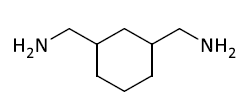
Molecular weight: 142.2
Chemical formula: C8H18N2
CAS NO.: 2579-20-6
EINECS NO.r:219-941-5
Appearance(25℃): Colorless, transparent liquid
Color (APHA): 20 Max
Viscosity (mPa·s/20℃): 9.1
Density(g/cm³,25℃): 0.940~0.950
Purity (%): ≥99.0
Active Hydrogen Equivalent (g/eq): 35.5
Melting Point (℃): < -70
Boiling Point (℃): 220
Flash Point (℃): 113
Structural Features
The 1,3-cyclohexanediamine molecule contains two primary amine groups, which are chemically highly reactive and can undergo reactions with acids, epoxy groups, isocyanate groups, and other functional groups. Due to the presence of the cyclohexane ring, 1,3-cyclohexanediamine exists in two isomeric forms: cis and trans. Industrial products typically consist of a mixture of these two isomers. The trans isomer is thermodynamically more stable, favoring the formation of polymers with high crystallinity and excellent thermal resistance; whereas the cis isomer promotes the formation of an amorphous structure, enhancing the material's transparency. By adjusting the cis-trans ratio during the synthesis process, it is possible to tailor the final properties of the material.
13-BAC Features:
Cures quickly at room temperature;
Excellent weather resistance;
Low viscosity, easy to handle;
Clear and transparent, with a well-defined appearance of the cured material;
The cured material exhibits excellent mechanical properties.
Preparation method
At present, the industrial production of 1,3-cyclohexanedimethanamine is primarily achieved through the catalytic hydrogenation of m-xylylenediamine (MXDA). This process typically uses m-phenylenediamine as the feed stock and is carried out under high temperature and pressure conditions in the presence of a solvent (such as water or alcohols) and a supported noble-metal catalyst (e.g., ruthenium, palladium, or rhodium). The benzene ring is saturated to form a cyclohexane ring through hydrogenation. During the reaction, by carefully controlling the type of catalyst, reaction temperature, pressure, and reaction time, the ratio of cis and trans isomers in the product can be adjusted. After the reaction, the crude product is separated from the catalyst and then purified by distillation to yield high-purity 1,3-cyclohexanediamine..
Application fields
Epoxy resin curing agent
13-BAC is primarily used as an epoxy curing agent or for the preparation of modified epoxy curing agents. Compared to aromatic amine curing agents, it not only has lower viscosity and better handling properties but also yields cured products with outstanding resistance to ultraviolet light (anti-yellowing), as well as excellent weather resistance, temperature resistance, water resistance, and chemical resistance. Moreover, it cures rapidly and can be used for curing at either room temperature or low temperatures. It is widely applied in high-end outdoor floor coatings, stone adhesives, electronic potting compounds, composite materials (such as automotive parts and wind turbine blades), and in the fields of jewelry adhesives and crystal adhesives where appearance and color quality are of paramount importance.
Make an epoxy curing agent
Mixing ratio:
Epoxy resin YLE-128 (epoxy equivalent weight 190): 100
Hardener 1.3-BAC dosage: 17–20
|
Initial formula (mass ratio) |
||
|
Epoxy resin |
YLE-128 EEW |
100g 190 |
|
Hardener |
1.3-BAC Active hydrogen quivalent |
19g 35.6 |
|
@23 ℃, 50% curing performance |
|
1.45h |
Note:
1. The data listed above are typical values only and do not constitute the product’s technical specifications.
2、The information provided above describes only the product’s performance and does not constitute a guarantee of such performance. Since the formulation and process conditions of end products may vary, we recommend testing the product performance and applicability described above to confirm whether they can achieve your intended results.
As an epoxy curing agent, 1,3-BAC can be used in CFRP. Compared to traditional RTM processes, the high-cycle RTM process (such as HP-RTM) requires shorter cycle times for resin injection, curing, and demolding, and does not require post-curing.
1,3-BAC having a low viscosity ensures more thorough fiber impregnation and extends the working time. Compared to other amine-based curing agents, It can significantly shorten the curing time and eliminates the need for post-curing, thereby enhancing the efficiency of the RTM process. Meanwhile, the cured product exhibits a higher glass transition temperature (Tg). This makes it suitable for mass production of large CFRP components.
Polyurethane raw materials
13-Cyclohexyl dimethylamine is a key raw material for the synthesis of alicyclic isocyanate—hexamethylene diisocyanate (H6XDI). H6XDI does not contain a benzene ring structure and boasts excellent light stability and hydrolysis resistance. It is an important raw material for preparing high-end polyurethane coatings, elastomers, and adhesives, and is particularly well-suited for applications with extremely high requirements for aging resistance, such as automotive paints and outdoor facilities..
Polyamide monomer
As a hydrogenated derivative monomer of MXD6 (m-xylylene diamine-adipic acid nylon), 1,3-cyclohexanediamine can be used to synthesize novel cycloaliphatic polyamides. These materials combine the excellent barrier properties and thermal stability of aromatic nylons with the hydrolysis resistance and flexibility of cycloaliphatic materials, making them promising candidates for applications in areas such as food packaging and automotive fuel lines..
Packaging & warehousing & transportation
Net weight: 190 kg per drum; packaged in iron drums.
During transportation, this product must not be mixed with acids or oxidizing agents. Store in a cool, dry environment, keeping it tightly sealed and protecting it from rain, direct sunlight, and high temperatures. Keep it away from oxidizing agents and acidic substances.
Precautions
1,3-Cyclohexadiamine is a toxic chemical. Acute toxicity studies indicate that the oral LD50 in rats is approximately 880 mg/kg, and the dermal LD50 is about 100 mg/kg. This substance is highly corrosive to the skin, eyes, and respiratory tract, and contact can cause severe burns. When handling this substance, wear protective clothing, chemical-resistant gloves, goggles, and a mask to avoid direct contact with skin and eyes. In case of contact, immediately wipe off the substance. And Rinse thoroughly with plenty of water and seek medical attention..If the eyes come into contact with it, first rinse thoroughly with plenty of water, then seek medical attention immediately.
For information on the safe use of this product, please refer to the Material Safety Data Sheet (MSDS).

 IPv6 network supported