


Language :

Language :
Phenolic epoxy resin viscosity is a flow property that separates YLEP-631 from YLEP-638. YLEP-631 is a liquid measuring 1,100-1,700 mPa·s at 52 °C; YLEP-638 is semi-solid, with a 36-40 °C softening point. Their EEW windows overlap at 168-190 g/eq, so flow decides the grade. Both are packed in drums.
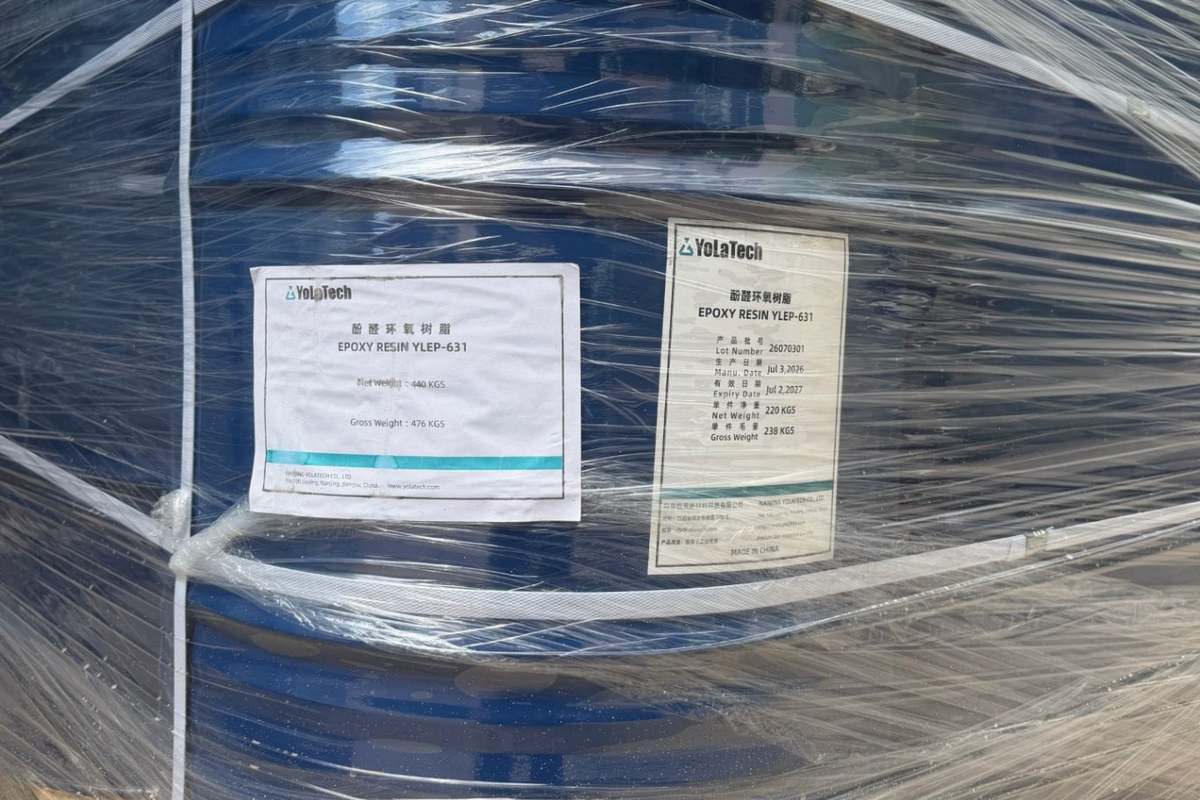
Figure 1. A wrapped pallet of YLEP-631 drums. The label carries the lot number, net and gross weight, and the wrap keeps moisture out until the melt station.
Both grades are phenol-formaldehyde novolac resins glycidylated with epichlorohydrin, and both carry the same five-line application list. Choosing between them is a rheology decision, not a chemistry one.
Viscosity governs how resin reaches fibre or fills a cavity. Too thick and the laminate keeps dry spots; too thin and the varnish drains before the press closes. Neither defect shows up on a certificate of analysis.
This report compares the two specifications, derives what overlapping EEW windows do to hardener weight, and states which process window each grade serves. Values come from the product pages read on 2026-11-06 and from published industry data.
Table 1 collects identity data and the open fields. Neither grade publishes a CAS number; only YLEP-631 publishes an epoxide count.
Table 1. Identity data for YLEP-631 and YLEP-638 as published, accessed 2026-11-06.
Item |
YLEP-631 |
YLEP-638 |
CAS number |
Not published |
Not published |
Epoxide groups |
2.7 average |
Not published |
Appearance |
Colorless to yellowish liquid |
Liquid in table, semi-solid in text |
Package |
Drum |
Drum |
Shelf life |
At least 12 months |
At least 12 months |
Table 2 lists the rows that differ. The rest of the two pages is identical text, so the specification alone cannot settle a choice.
Table 2. Published specification of YLEP-631 and YLEP-638.
Property |
YLEP-631 |
YLEP-638 |
EEW |
168-180 g/eq |
170-190 g/eq |
Color, Gardner |
3 maximum |
3.0 maximum |
Hydrolyzable chlorine |
500 ppm maximum |
500 ppm maximum |
Flow property |
1,100-1,700 mPa·s at 52 °C |
Softening point 36-40 °C |
Method named |
Temperature only |
None |
Epoxy equivalent weight is determined by titration, and the lot COA outranks the catalogue window. ASTM D1652 and ISO 3001 describe the two routes.
YLEP-631 viscosity is measured at 52 °C, the only flow number published. ASTM D445 covers the kinematic route; a rotational reading can sit a few hundred mPa·s away.
Softening point is a ring-and-ball figure in European specifications, and the YLEP-638 page names no method. A drop-point result reads about 10 °C higher on the same sample.
Incoming checks run in duplicate, with a third determination from another drum position when results disagree by more than 5 g/eq. No independent laboratory work was performed; every figure is published or arithmetic on one.
Molecular weight distribution sets the flow gap, not the epoxide count. A novolac oligomer mixture carries a spread of chain lengths, and the long tail lifts softening point faster than average EEW.
YLEP-631 averages 2.7 epoxy groups per molecule against two for a bisphenol A diglycidyl ether. That functionality explains the denser cured network; it does not explain the flow.
Table 3. Softening point against melt viscosity at 150 °C for cresol novolac grades, published industry data.
Softening point, °C |
Melt viscosity, Pa·s |
Ratio to 55 °C row |
55 |
0.1 |
1.0 |
67 |
0.3 |
3.0 |
70 |
0.5 |
5.0 |
73 |
0.6 |
6.0 |
80 |
1.0 |
10.0 |
88 |
1.7 |
17.0 |
Across the 33 °C span of that table, melt viscosity rises 17-fold, about 2.4 times per 10 °C. That factor is calculated from the published pairs, and it is why a 4 °C band is worth arguing about.
YLEP-638 sits at 36-40 °C, below the lowest row. Read against the curve, it is a solid that softens in a warm room and flows at 80 °C, which matches a melt tank rather than a drum pump.
A bisphenol A liquid is the default alternative, and the EEW overlap hides how differently the families behave.
Table 4. Property comparison of the two novolac grades against bisphenol A epoxy resin.
Property |
YLEP-631 |
YLEP-638 |
Bisphenol A liquid |
EEW |
168-180 g/eq |
170-190 g/eq |
184-190 g/eq |
State at 25 °C |
Liquid |
Semi-solid |
Liquid |
Flow number |
1,100-1,700 mPa·s at 52 °C |
36-40 °C softening point |
11,000-15,000 mPa·s at 25 °C |
Epoxide groups |
2.7 |
Not published |
2 |
Hydrolyzable chlorine |
500 ppm maximum |
500 ppm maximum |
Grade dependent |
Stoichiometry barely moves: a 168-190 g/eq window against roughly 184-190 g/eq is a few percent of hardener weight, inside a batch tolerance.
Cured heat resistance does move. Crosslink density from 2.7 epoxides against two keeps modulus higher at 150 °C, and the same density is why elongation falls.
For a thin part under 100 °C, the bisphenol A liquid usually wins on cost and toughness. Above that ceiling the novolac earns its price.
Hardener weight follows one equation, phr being parts per hundred parts of resin by mass.
phr = 100 × AHEW ÷ EEW
A phenol novolac hardener at a 105 g/eq hydroxyl equivalent is a common laminate pairing. The figure is typical rather than universal; check the hardener TDS before freezing a recipe.
Table 5. Stoichiometric hardener dosage in phr across the published EEW window, calculated from the equation above.
Hardener |
168 g/eq |
174 g/eq |
180 g/eq |
190 g/eq |
Phenol novolac, 105 g/eq |
62.5 |
60.3 |
58.3 |
55.3 |
DDS, 62.1 g/eq |
37.0 |
35.7 |
34.5 |
32.7 |
DICY, 21.0 g/eq |
12.5 |
12.1 |
11.7 |
11.1 |
Blending changes flow without rewriting the recipe. A 70/30 mass blend of YLEP-638 and YLEP-631 lands at 178.2 g/eq and moves the DICY figure from 11.7 to 11.8 phr.
Filler loadings are quoted in phr and bought in weight percent. Silica at 250 phr is 71.4% by weight; a 70% target is 233 phr. Past 250 phr a planetary mixer stops wetting out and the job needs a press.
The operating window is narrower than the specification suggests: the only published flow number sits at a temperature no workshop holds all day.
Without a melt line, a solution type phenolic epoxy resin avoids the tank, at the cost of solvent recovery. A reactive diluent such as 16-hexanediol diglycidyl ether YLD-6008 cuts viscosity without solvent, but lowers crosslink density and the heat resistance that justified a novolac.
Two habits prevent most of the trouble. Keep the melt covered, since a wet novolac foams under vacuum. Log tank temperature every batch; a 10 °C drift moves melt viscosity by about 2.4 times.
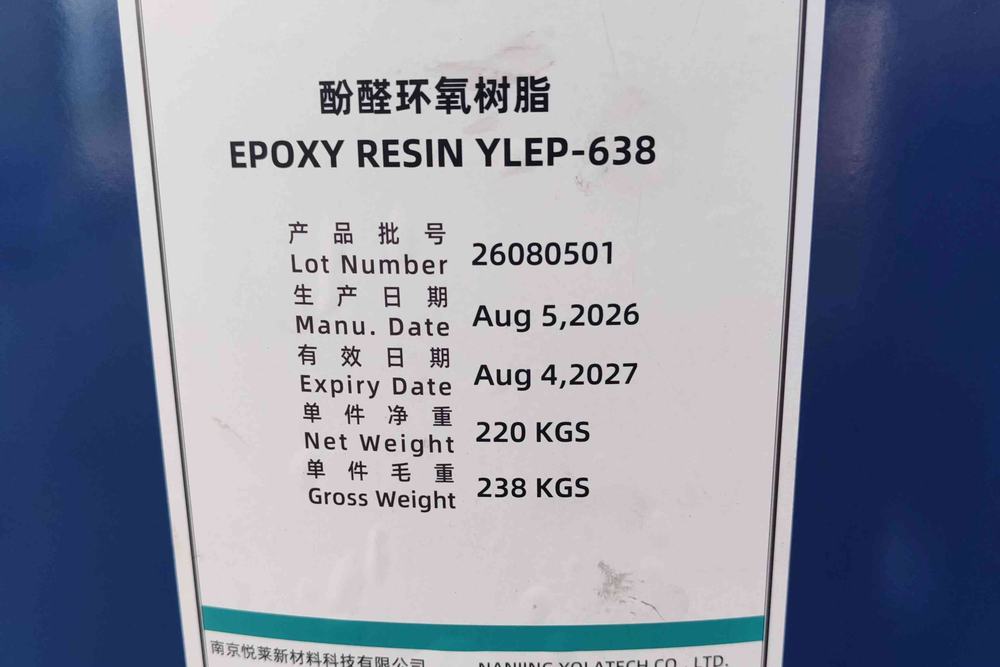
Figure 2. The YLEP-638 drum label: lot number, manufacture and expiry dates, 220 kg net and 238 kg gross. Log the lot beside the tank temperature.
Both pages list five end uses, and the split follows the process rather than the market. Table 6 sets out which grade carries flow.
Table 6. Process role of each grade across the five published applications.
Application |
YLEP-631 |
YLEP-638 |
Laminates and CCL |
Varnish at 40-60% solids |
High-build varnish, needs solvent |
Potting and casting |
Carries filler to 250 phr |
Hot pour above 70 °C |
Adhesives |
Metal and ceramic bonds |
Film and paste, hot applied |
Coatings |
Solvent-borne, 30-50% solids |
High-solids bake |
Composites |
Warm RTM and wet winding |
Prepreg and hot-melt film |
Laminate work is the clearest case. A varnish on the liquid grade holds 40-60% solids and still passes the tower; the same solids on the semi-solid grade need a stronger solvent.
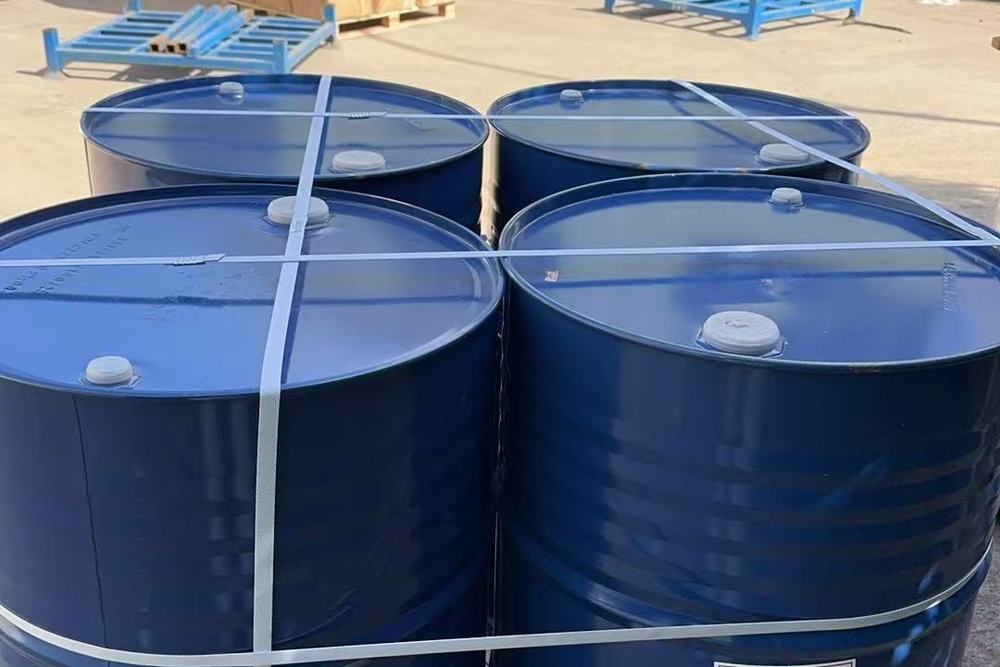
Figure 3. Four drums on one pallet at the loading bay; a casting campaign is usually sized in pallets, not kilos.
Ambient hand lay-up suits neither grade. The liquid grade is workable at 52 °C, not at workshop temperature, and the semi-solid must be melted before it wets glass.
Nor is either grade an electronic material. A 500 ppm hydrolyzable chlorine ceiling suits laminates; a customer needing single-digit chloride must ask for another grade.
Two details need resolution before either grade enters a drawing. Appearance is listed as liquid for YLEP-638 while the text calls it semi-solid; trust the text, since a 36-40 °C softening point implies a solid at ambient.
The softening method is unstated, and a drop-point number would read 46-50 °C. No CAS number is published either, so a customs or REACH dossier must rest on the supplier declaration.
Incoming inspection covers three numbers. EEW is determined by titration against the lot COA, alongside Gardner color and hydrolyzable chlorine. Reject a lot outside the EEW window, because every phr in Table 5 shifts with it.
Packaging is a drum, with at least 12 months from manufacture in the original packing. A drum reopened repeatedly collects moisture at the headspace; use it first.
Storage is the standard routine: ventilated area, away from flame and sunlight, cap closed after use. Safety data sits in the MSDS; both grades are skin sensitisers. Any RoHS, REACH or UL 94 statement has to be verified against current certificates, since nothing in a description implies certification.
No. Hardener weight is unchanged, but flow is not: a 168-180 g/eq liquid replaces a 36-40 °C semi-solid, so a melt line becomes a pump line. Reformulate the solvent first.
Not published. The only flow number is 1,100-1,700 mPa·s at 52 °C, so a 25 °C pump curve must be measured on your own lot.
Melt viscosity falls about 2.4 times per 10 °C of softening point. A tank set 15 °C high can halve working viscosity and let the mix drain off a wall.
Yes. A 70/30 mass blend lands at 178.2 g/eq and its softening point falls between the components; verify by ring-and-ball rather than by calculation.
DDS at 34.5-37.0 phr or DICY at 11.7-12.5 phr. A phenolic novolac hardener at 55-62 phr gives the highest heat resistance and the shortest pot life.
For a laminate, usually. For an encapsulant touching aluminium bond pads, no; ask for a lower-chloride grade and confirm it on the COA.
YLEP-631 and YLEP-638 share a novolac backbone and overlapping EEW windows, so stoichiometry does not separate them. State does: 1,100-1,700 mPa·s at 52 °C against a 36-40 °C softening point.
Hardener demand stays within a few percent either way, 55.3 to 62.5 phr for a phenolic novolac. Flow, filler tolerance and B-stage behaviour are what a process trial has to measure.
Pick the liquid grade when the mix must move at moderate temperature, the semi-solid when the part needs a dry stage before cure. Confirm the softening method before the first order.
1. Yolatech product page, YLEP-631: https://www.yolatech.com/pne-type-phenolic-epoxy-resin-ylep-631
2. Yolatech product page, YLEP-638: https://www.yolatech.com/pne-type-phenolic-epoxy-resin-ylep-638
3. Yolatech product page, bisphenol A grades: https://www.yolatech.com/bisphenol-a-epoxy-resin
4. Technical Data Sheet, Material Safety Data Sheet and Certificate of Analysis (COA) for YLEP-631 and YLEP-638, Yolatech (available on request).
5. ASTM D1652, epoxy content of epoxy resins (EEW); ISO 3001, determination of epoxy equivalent.
6. ASTM D445, kinematic viscosity; ASTM D1544, Gardner color; ASTM E203, water by Karl Fischer.

 IPv6 network supported