Home

1,3-BAC

  • 1,3-BAC (HXDA): A High-Performance Cycloaliphatic Diamine for Advanced Epoxy Resin Applications
    1,3-BAC (HXDA): A High-Performance Cycloaliphatic Diamine for Advanced Epoxy Resin Applications
    Jul 13, 2026
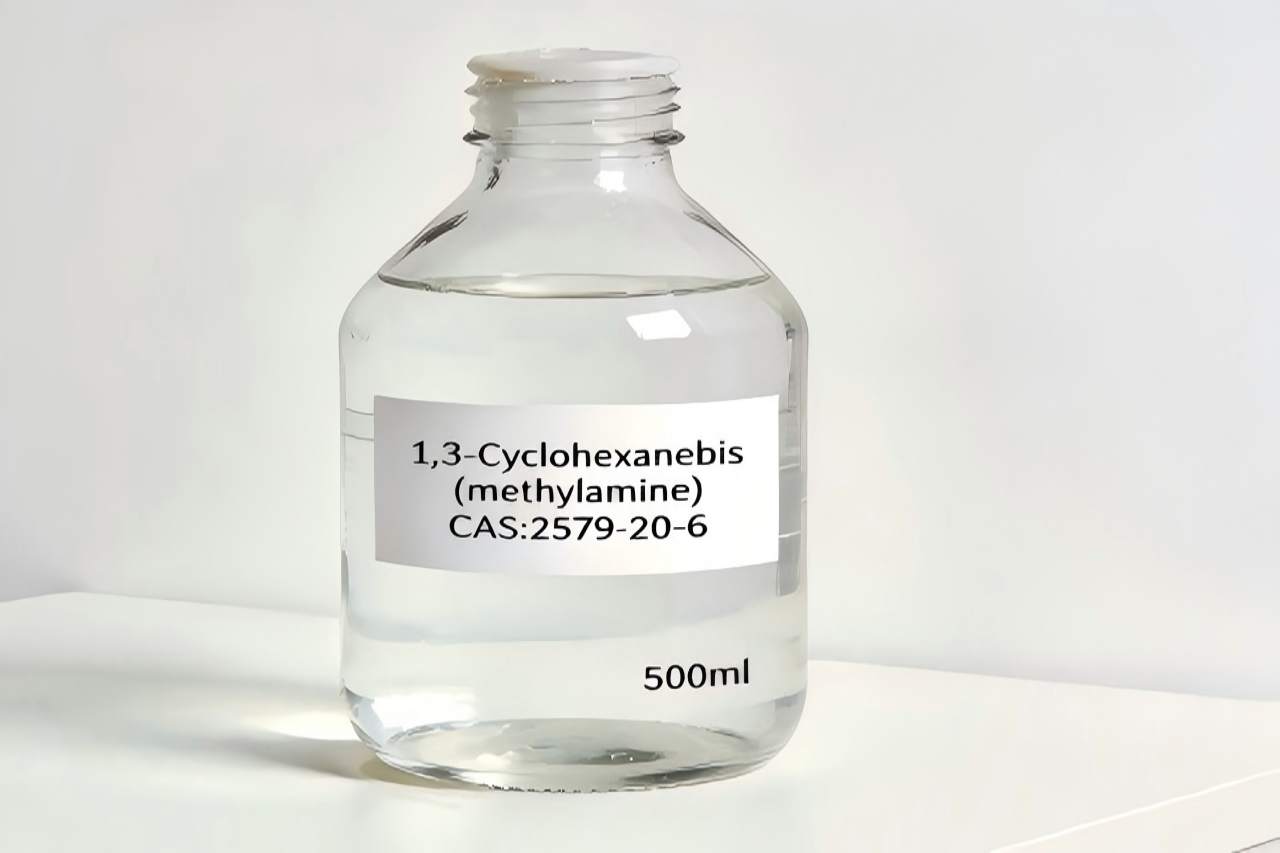
    Product: 1,3-Cyclohexanebis(methylamine)CAS No.: 2579-20-6Code: 1,3-BAC / HXDA   1. Product Information Item Information Product Name 1,3-Cyclohexanebis(methylamine) CAS No. 2579-20-6 Formula C8H18N2 Molecular Weight 142.24 g/mol Category Alicyclic Diamine Compound   2. Product Description 1,3-BAC is an important alicyclic diamine compound containing two primary amino groups. It provides excellent reactivity, low viscosity and good processing performance. Due to its non-aromatic molecular structure, it improves weather resistance, anti-yellowing performance and long-term stability of polymer materials.   3. Key Advantages · Low viscosity and excellent processability · Fast curing performance · Excellent anti-yellowing and weather resistance · Good chemical resistance and durability · Suitable for high-performance polymer applications   4. Technical Data Item Information Appearance Colorless transparent liquid Purity ≥99.0% Viscosity 9.1 mPa·s at 20℃ Density 0.940-0.950 g/cm³ at 25℃ Freezing Point < -70℃ Boiling Point Approx. 220℃ Flash Point Approx. 113℃   5. Applications Epoxy Resin Curing Agent: coatings, adhesives, electronic encapsulation and composite materials.Polyurethane Industry: raw material for alicyclic isocyanates and advanced polyurethane systems.Specialty Polymers: used in development of high-performance cycloaliphatic polymers.   6. Packaging, Storage & Safety Packaging: 190kg iron drum.Storage: Keep sealed in a cool and dry place. Avoid heat, sunlight, acids and oxidizing agents.Safety: Corrosive chemical. Use appropriate protective equipment and refer to MSDS.
    Read More
  • Common Amine Curing Agents and Application Conditions
    Common Amine Curing Agents and Application Conditions
    Jul 08, 2026
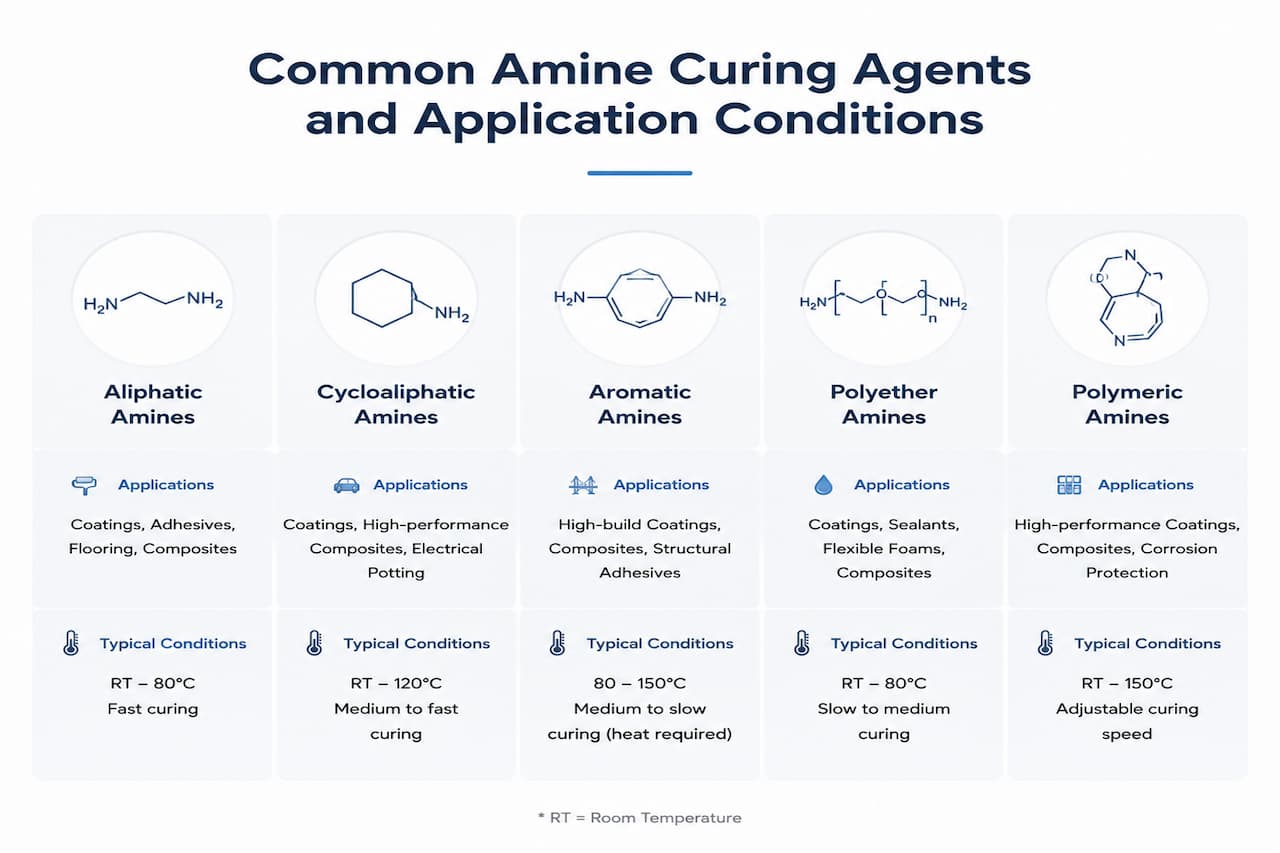
    DETA (Diethylenetriamine)   Appearance: Colorless to pale yellow transparent liquidChemical formula: C₄H₁₃N₃Molecular weight: 103.166CAS No.: 111-40-0Melting point: -40 °CBoiling point: 206 °CDensity: 0.96 g/cm³Amine value (mg KOH/g): 1300–1400Viscosity (25 °C) mPa·s: 5–20Mixing ratio: YLE-128 (E-51) epoxy resin : DETA (Diethylenetriamine) = 100 g : 10–11 g (by weight) YLE-220 (E-44) epoxy resin : DETA (Diethylenetriamine) = 100 g : 10 g (by weight)Curing conditions: 25 °C / 3–6 hours or 60 °C / 1–2 hours   TETA (Triethylenetetramine)   Appearance: Colorless to slightly yellow viscous liquidChemical formula: C₆H₁₈N₄Molecular weight: 146.234CAS No.: 112-24-3Melting point: 12 °CBoiling point: 266–267 °CDensity: 0.982 g/cm³Flash point: 135 °C (CC)Amine value (mg KOH/g): 1100–1200Viscosity (25 °C) mPa·s: 5–30Mixing ratio: YLE-128 (E-51) epoxy resin : TETA (triethylenetetramine) = 100 g : 13–14 g (by weight) YLE-220 (E-44) epoxy resin : TETA (triethylenetetramine) = 100 g : 11–13 g (by weight)Curing conditions: 25 °C / 3–6 hours or 60 °C / 1–2 hours   Polyether amine curing agent Chemical name: Polyether amine; Polyether polyamine; Polyetheramine (PEA); Aliases: Polypropylene glycol bis(2-aminopropyl ether); 2-(Aminooxy)propan-1-amineCAS No.: 9046-10-0   Polyether amine curing agent D-230 Mixing ratio: YLE-128 (E-51) epoxy resin : D-230 = 100 g : 30 gCuring conditions: 25 °C / 36 hours or 60 °C / 3 hours or 80 °C / 1 hourCured product characteristics: Colorless and transparent, high hardness, high toughness, not easily brittle. Suitable for handicrafts, nameplates, and potting applications with special requirements.   Polyether amine curing agent D-400 Mixing ratio: YLE-128 (E-51) epoxy resin : D-400 = 100 g : 50 gCharacteristics: Good toughness after curing, low viscosity, high mechanical performance of the cured product, and resistance to high-low temperature thermal shock (-35 °C to 120 °C).   Polyether amine curing agent D-2000 Mixing ratio: YLE-128 (E-51) epoxy resin : D-2000 = 40 g : 100 gCuring conditions: 80 °C / 6–10 hoursCharacteristics: D-2000 is colorless and transparent. The cured product exhibits excellent elasticity, high peel strength, colorless transparency, high toughness, not easily brittle, and strong adhesion. Suitable for potting applications with special requirements, and resistance to high-low temperature thermal shock (-40 °C to 130 °C). When combined with liquid epoxy resin, D-2000 is used for colorless and transparent applications in composites, wind power, handicrafts, and nameplates. TYPE D-230 D-400 T403 D-2000 D-5000 Appearance Colorless transparent liquid Colorless transparent liquid Colorless transparent liquid Colorless transparent liquid Colorless transparent liquid Viscosity (MPa·s / 25℃) 3~10 10~50 500~200 260~280 300~600 Density (25℃, g/cm³) 0.92~0.98 0.92~0.98 0.92~0.98 0.92~0.98 0.92~0.98 Active Hydrogen Equivalent 58 100 85 500 1250 Film Drying Time (25℃) 36 hours 72 hours 24 hours 100 hours 500 hours Recommended Mixing Ratio (with E51) 10g : 3g 10g : 5g 10g : 4.5g 10g : 25g 10g : 65g Pot Life (Min / 25℃) ≥3 hours ≥6 hours ≥4 hours ≥24 hours ≥48 hours Curing Conditions 80°C / 6~10 hrs 80°C / 6~10 hrs 80°C / 6~10 hrs 80°C / 6~10 hrs 80°C / 6~10 hrs Cured Hardness (Shore) 90D 65D 85D D20 --     1,3-BAC (1,3-Bis(aminomethyl)cyclohexane)  CAS No.: 2579-20-6 13-BAC is primarily used as an epoxy curing agent or for the preparation of modified epoxy curing agents. Compared to aromatic amine curing agents, it not only has lower viscosity and better handling properties but also yields cured products with outstanding resistance to ultraviolet light (anti-yellowing), as well as excellent weather resistance, temperature resistance, water resistance, and chemical resistance. Moreover, it cures rapidly and can be used for curing at either room temperature or low temperatures. It is widely applied in high-end outdoor floor coatings, stone adhesives, electronic potting compounds, composite materials (such as automotive parts and wind turbine blades), and in the fields of jewelry adhesives and crystal adhesives where appearance and color quality are of paramount importance.Mixing ratio: YLE-128 (E-51) epoxy resin : 1,3-BAC = 100 g : 18–20 gCuring conditions: 25 °C / 6–12 hours   MXDA (m-Xylylenediamine)  CAS No.: 1477-55-0Characteristics: m-Xylylenediamine is a high-performance and widely used epoxy resin curing agent, and also an important fine chemical intermediate. It can be used in the synthesis of polyurethanes, a range of epoxy resins, rubber additives, photosensitive plastics, pesticides, fiber finishing agents, rust inhibitors, chelating agents, lubricants, paper processing agents, and electronic chemicals. In nylon products such as MXD6 (a polycondensate of MXDA and adipic acid), and in the synthesis of functional epoxy resins, MXDA is widely utilized due to its unique structure, which imparts various excellent physical and chemical properties.Mixing ratio: YLE-128 (E-51) epoxy resin : MXDA = 100 g : 18–20 gCuring conditions: 50–60 °C / 3 hours + 120–150 °C / 2 hours   DETDA (Diethyltoluenediamine)  CAS No.: 68479-98-1Characteristics: DETDA is equivalent to Ethancure 100 and Lonza DETDA 80. It is a highly effective chain extender for polyurethane elastomers, and can also be used as a curing agent for polyurethanes and epoxy resins, as an antioxidant for epoxy resins, and in industrial oils and lubricants. Additionally, it serves as an intermediate for organic synthesis.Mixing ratio: YLE-128 (E-51) epoxy resin : DETDA = 100 g : 25 gCuring conditions: 100 °C / 4 hours + 150 °C / 1 hour   PACM: 4,4'-Diaminodicyclohexylmethane CAS No.: 1761-71-3PACM curing agent (hydrogenated MDA) has performance equivalent to Air Products' Amicure PACM and BASF's DC (i.e., Baxxodur EC330). It is used as an epoxy resin curing agent and as a curing agent for epoxy composite materials. It is also applied as a chain extender and additive in polyaspartic esters, polyamides (PA), polyurethanes (PU), and polyurea spray elastomers (SPUA). Application fields include high-grade composites, filament winding, lamination, casting, RIM, pultrusion, etc.Mixing ratio: YLE-128 (E-51) epoxy resin : PACM = 100 g : 25–30 gCuring conditions: 25 °C / 24 hours or 60 °C / 3 hours   DDS: 4,4'-Diaminodiphenyl sulfone CAS No.: 80-08-04,4'-Diaminodiphenyl sulfone is an epoxy resin curing agent with excellent high-temperature resistance. It is used in high-temperature-resistant prepregs, high-temperature-resistant molded products (automotive molds, rail transit, aerospace, etc.), and high-temperature-resistant laminates.Mixing ratio: YLE-128 (E-51) epoxy resin : DDS = 100 g : 25–35 gCuring conditions: 130 °C / 2 h + 200 °C / 2 h   DDM: 4,4'-Diaminodiphenylmethane CAS No.: 101-77-9Liquid DDM product is a mixture containing approximately 60% 4,4'-diaminodiphenylmethane and 40% polyphenyl polymethylene polyamine, appearing as a light yellow viscous liquid at room temperature. DDM is an important chemical intermediate. In addition to being primarily used in the production of MDI and HMDI, it is also extensively used in the preparation of polyimide (PI) insulating varnishes, polyesterimide (PEI) insulating varnishes, bismaleimide resins, and other electrical insulation materials. It can also be used as a curing agent for epoxy resins and as a chain extender for polyurethane elastomers.Mixing ratio: YLE-128 (E-51) epoxy resin : liquid DDM = 100 g : 30–35 g (flexible)Curing conditions: 80 °C / 3–4 hours
    Read More
  • 1,3-BAC——Alicyclic diamine compounds used for epoxy resins and polyurethanes
    1,3-BAC——Alicyclic diamine compounds used for epoxy resins and polyurethanes
    Jun 18, 2026
    Product Information Chemical Name:1,3-Cyclohexanedi(methylamine Alias/Abbreviation/Short Name/Old Name: 1,3-BAC, HXDA, 1,3-Bis(aminoethyl)cyclohexane Application fields: epoxy resin, polyurethane, polyamide   1,3-BAC is an important alicyclic diamine organic compound. At room temperature, it appears as a colorless, transparent, low-viscosity liquid with a distinct ammonia odor. It is corrosive, flammable when exposed to open flames, and has a pungent smell. Soluble in water, Ethanol, etherand various organic solvents.   Due to the characteristics of the product structure, 1,3-BAC having excellent yellowing resistance, low viscosity, rapid curing speed, and excellent chemical corrosion resistance, it is widely used in the formulation of epoxy resin curing agents, the synthesis of polyurethane isocyanates, and the preparation of specialty polyamides.Compared to other curing agent raw materials, this product features rapid curing speed, requires a lower addition amount, and exhibits outstanding resistance to yellowing. Its low solidification point ensures excellent curing performance even in low-temperature and humid environments.   With the decline in the cost of m-phenylenediamine raw materials and the increasing stringency of environmental regulations, 1,3-cyclohexanediamine is gradually emerging as an important alternative to traditional aromatic amines.   Physical Properties Structural formula: Molecular weight: 142.2 Chemical formula: C8H18N2 CAS NO.: 2579-20-6 EINECS NO.r:219-941-5Appearance(25℃): Colorless, transparent liquidColor (APHA): 20 Max Viscosity (mPa·s/20℃): 9.1 Density(g/cm³,25℃): 0.940~0.950 Purity (%): ≥99.0 Active Hydrogen Equivalent (g/eq): 35.5 Melting Point (℃): < -70 Boiling Point (℃): 220 Flash Point (℃): 113 Structural Features The 1,3-cyclohexanediamine molecule contains two primary amine groups, which are chemically highly reactive and can undergo reactions with acids, epoxy groups, isocyanate groups, and other functional groups. Due to the presence of the cyclohexane ring, 1,3-cyclohexanediamine exists in two isomeric forms: cis and trans. Industrial products typically consist of a mixture of these two isomers. The trans isomer is thermodynamically more stable, favoring the formation of polymers with high crystallinity and excellent thermal resistance; whereas the cis isomer promotes the formation of an amorphous structure, enhancing the material's transparency. By adjusting the cis-trans ratio during the synthesis process, it is possible to tailor the final properties of the material.   13-BAC Features: Cures quickly at room temperature; Excellent weather resistance; Low viscosity, easy to handle; Clear and transparent, with a well-defined appearance of the cured material; The cured material exhibits excellent mechanical properties.   Preparation method At present, the industrial production of 1,3-cyclohexanedimethanamine is primarily achieved through the catalytic hydrogenation of m-xylylenediamine (MXDA). This process typically uses m-phenylenediamine as the feed stock and is carried out under high temperature and pressure conditions in the presence of a solvent (such as water or alcohols) and a supported noble-metal catalyst (e.g., ruthenium, palladium, or rhodium). The benzene ring is saturated to form a cyclohexane ring through hydrogenation. During the reaction, by carefully controlling the type of catalyst, reaction temperature, pressure, and reaction time, the ratio of cis and trans isomers in the product can be adjusted. After the reaction, the crude product is separated from the catalyst and then purified by distillation to yield high-purity 1,3-cyclohexanediamine..   Application fields Epoxy resin curing agent 13-BAC is primarily used as an epoxy curing agent or for the preparation of modified epoxy curing agents. Compared to aromatic amine curing agents, it not only has lower viscosity and better handling properties but also yields cured products with outstanding resistance to ultraviolet light (anti-yellowing), as well as excellent weather resistance, temperature resistance, water resistance, and chemical resistance. Moreover, it cures rapidly and can be used for curing at either room temperature or low temperatures. It is widely applied in high-end outdoor floor coatings, stone adhesives, electronic potting compounds, composite materials (such as automotive parts and wind turbine blades), and in the fields of jewelry adhesives and crystal adhesives where appearance and color quality are of paramount importance.   Make an epoxy curing agent Mixing ratio:Epoxy resin YLE-128 (epoxy equivalent weight 190): 100Hardener 1.3-BAC dosage: 17–20 Initial formula (mass ratio) Epoxy resin YLE-128 EEW 100g 190 Hardener 1.3-BAC Active hydrogen quivalent 19g 35.6 @23 ℃, 50% curing performanceTouch-drySemi-dryCompletely dry@5℃, 80% curing performanceTouch-drySemi-dryCompletely dry 1.45h4.5h>24h13.5h>24h>24h   Note: 1. The data listed above are typical values only and do not constitute the product’s technical specifications. 2、The information provided above describes only the product’s performance and does not constitute a guarantee of such performance. Since the formulation and process conditions of end products may vary, we recommend testing the product performance and applicability described above to confirm whether they can achieve your intended results.   As an epoxy curing agent, 1,3-BAC can be used in CFRP. Compared to traditional RTM processes, the high-cycle RTM process (such as HP-RTM) requires shorter cycle times for resin injection, curing, and demolding, and does not require post-curing.   1,3-BAC having a low viscosity ensures more thorough fiber impregnation and extends the working time. Compared to other amine-based curing agents, It can significantly shorten the curing time and eliminates the need for post-curing, thereby enhancing the efficiency of the RTM process. Meanwhile, the cured product exhibits a higher glass transition temperature (Tg). This makes it suitable for mass production of large CFRP components.   Polyurethane raw materials 13-Cyclohexyl dimethylamine is a key raw material for the synthesis of alicyclic isocyanate—hexamethylene diisocyanate (H6XDI). H6XDI does not contain a benzene ring structure and boasts excellent light stability and hydrolysis resistance. It is an important raw material for preparing high-end polyurethane coatings, elastomers, and adhesives, and is particularly well-suited for applications with extremely high requirements for aging resistance, such as automotive paints and outdoor facilities..   Polyamide monomer As a hydrogenated derivative monomer of MXD6 (m-xylylene diamine-adipic acid nylon), 1,3-cyclohexanediamine can be used to synthesize novel cycloaliphatic polyamides. These materials combine the excellent barrier properties and thermal stability of aromatic nylons with the hydrolysis resistance and flexibility of cycloaliphatic materials, making them promising candidates for applications in areas such as food packaging and automotive fuel lines..   Packaging & warehousing & transportation Net weight: 190 kg per drum; packaged in iron drums. During transportation, this product must not be mixed with acids or oxidizing agents. Store in a cool, dry environment, keeping it tightly sealed and protecting it from rain, direct sunlight, and high temperatures. Keep it away from oxidizing agents and acidic substances.   Precautions 1,3-Cyclohexadiamine is a toxic chemical. Acute toxicity studies indicate that the oral LD50 in rats is approximately 880 mg/kg, and the dermal LD50 is about 100 mg/kg. This substance is highly corrosive to the skin, eyes, and respiratory tract, and contact can cause severe burns. When handling this substance, wear protective clothing, chemical-resistant gloves, goggles, and a mask to avoid direct contact with skin and eyes. In case of contact, immediately wipe off the substance. And Rinse thoroughly with plenty of water and seek medical attention..If the eyes come into contact with it, first rinse thoroughly with plenty of water, then seek medical attention immediately.   For information on the safe use of this product, please refer to the Material Safety Data Sheet (MSDS).
    Read More
  • Application of 1,3-Cyclohexanedimethanamine (1,3-BAC) in Jewelry Adhesives
    Application of 1,3-Cyclohexanedimethanamine (1,3-BAC) in Jewelry Adhesives
    Jun 18, 2026
    Epoxy resin for jewelry generally refers to highly transparent epoxy resin materials used for decorative purposes.   It is widely used in a variety of items, including personal accessories such as earrings, hair clips, necklaces, bracelets, hat badges, brooches, apparel, key rings, buttons, shoe ornaments, belt buckles, and bag charms. It is also applied in daily necessities like door and cabinet handles, hardware fittings, as well as picture frames, signage, and other decorative items.   Epoxy resins for jewelry are typically categorized into flexible resin, rigid resin, doming resin, and casting/polishing resin. The main components usually include epoxy resin, amine curing agents, and various additives. These resins are characterized by high transparency, flexibility or high hardness, and excellent yellowing resistance.   1,3-BAC (1,3-Cyclohexanedimethanamine) is an aliphatic amine and serves as a key raw material for epoxy curing agents, widely used around the world. When used as a raw material for jewelry epoxy curing agents, 1,3-BAC offers typical advantages such as low viscosity, high hardness, high transparency, yellowing resistance, and fast curing speed. This endows the epoxy jewelry resin with a more ideal appearance and outstanding performance.   Typical Physical and Chemical Data of 1,3-BAC: Product Name: 1,3-Cyclohexanedimethanamine Appearance: Colorless transparent liquid Color (APHA): 20 Max Viscosity (cps/20℃): 9.1 Density: 0.940 - 0.950 Freezing Point (℃): < -70 Active Hydrogen Equivalent: 35.6   Features: Fast curing speed at room temperature Excellent weather resistance Low viscosity and easy handling Crystal clear with excellent appearance of cured products Cured products possess excellent mechanical properties
    Read More

leave a message

leave a message
If you are interested in our products and want to know more details,please leave a message here,we will reply you as soon as we can.
submit

home

products

WhatsApp

Contact Us