Cycloaliphatic Amine Curing Agent: YLH-3618 vs Ancamine 1618
Nov 17, 2026
Cycloaliphatic amine curing agent YLH-3618 is a modified cycloaliphatic amine at 300-500 mPa·s, 260-290 mg KOH/g amine value and AHEW 112 g/eq. At 60 phr it enters the Ancamine 1618 recipe unchanged, but AHEW, gel time and colour do not follow. The recipe matches; the window itself only partly does.
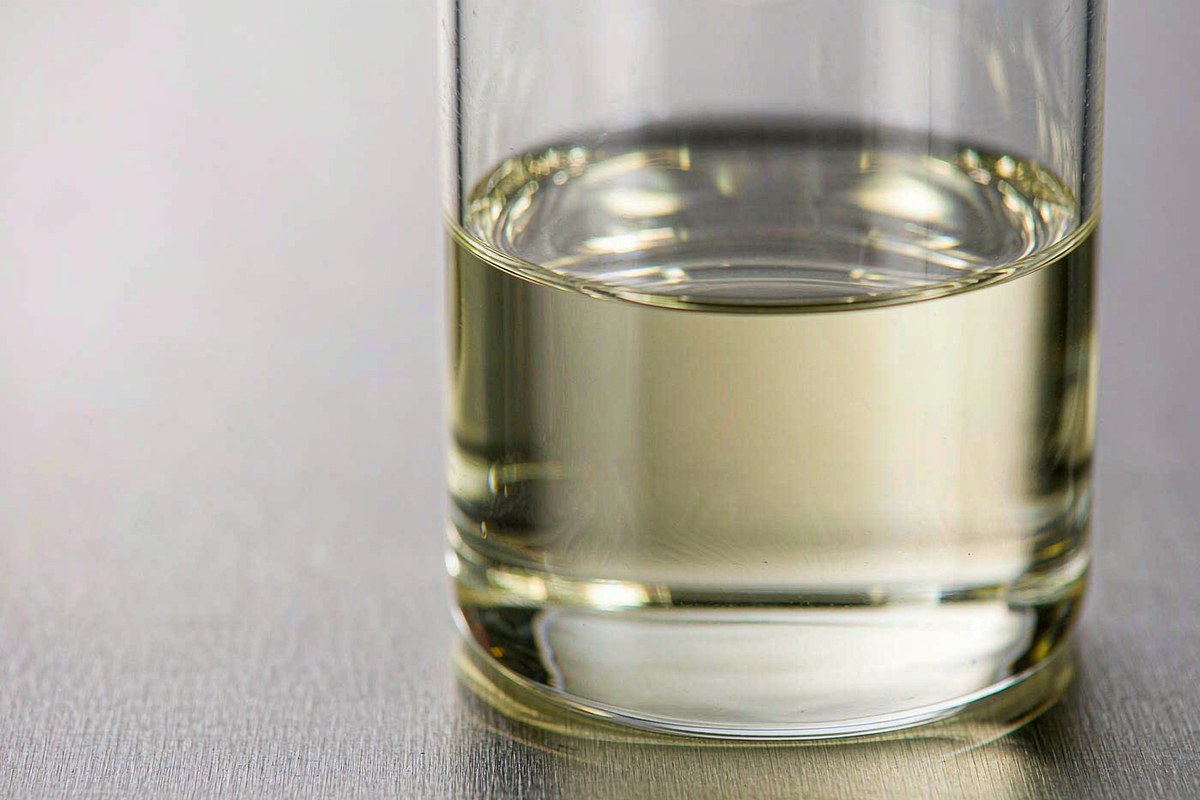
Figure 1. YLH-3618 as supplied: a pale, 300-500 mPa·s modified cycloaliphatic amine.
1. Introduction
A 60 phr dosage at EEW 190 is the first number buyers compare, and on it YLH-3618 and Ancamine 1618 are identical. Both are modified cycloaliphatic amines for solvent-free flooring and tank linings, where low viscosity and pale colour decide the formulation.
This report compares published figures only. YLH-3618 values come from the 2026 Yolatech curing agent catalogue, page 9; Ancamine 1618 values from the supplier's technical data sheet. Dosages are recalculated from AHEW and EEW, and each derived number carries its arithmetic.
2. Materials and Methods: Published Specification of the Cycloaliphatic Amine Curing Agent
2.1 Product Identification and Specification
YLH-3618 carries an AHEW of 112 g/eq and a recommended 60 phr at EEW 190, the two figures needed to build a recipe. The grade has no standalone product page, so the catalogue entry is the authoritative public source.
Table 1. Published identification and specification of YLH-3618 (Catalogue 2026, page 9).
Item
Published value
Grade
YLH-3618
Chemical type
Modified cycloaliphatic amine
Colour, Gardner
3 max
Viscosity at 25 °C
300-500 mPa·s
Amine value
260-290 mg KOH/g
Amine hydrogen equivalent weight
112 g/eq
Recommended dosage, EEW 190
60 phr
Pot life
40 min
Thin film set time
7 h
CAS number
Not published
Density, flash point
Not published
Pack size, shelf life
Not published
2.2 Test Methods and Data Sources
Three kinds of figure appear here, with different weight. Catalogue values are supplier typicals, and no test method is named, so the list below is the conventional route for this class.
Colour is read according to ASTM D1544, viscosity according to ASTM D445, amine value according to ISO 9702, water content according to ASTM E203; resin EEW by ASTM D1652 or ISO 3001. Derived dosages are calculated, not measured.
Ancamine 1618 figures come from the supplier data sheet (EMEA edition): 450 mPa·s, amine value 260-285 mg KOH/g, AHEW 115 g/eq, 60 phr at EEW 190, gel time 50 min on 150 g at 25 °C. Naming the source lets a reader check the comparison.
3. Results and Discussion: AHEW, Stoichiometry and the 60 phr Match
3.1 Structure and Reactivity
An AHEW of 112 g/eq means 112 g of YLH-3618 carries one mole of active hydrogen, so 60 phr supplies 0.536 eq against 0.526 eq of epoxy in 100 g of EEW 190 bisphenol-A resin. The two sit within 1.8%, which is why the dosage rounds to 60.
The amine value does not agree with that reading. Dividing 56,100 by the 275 mg KOH/g midpoint gives 204 g/eq, 82% above the published 112. Ancamine 1618 behaves the same way: 56,100 ÷ 272 = 206 g/eq against a stated 115.
Both suppliers calibrate AHEW so the recommended phr lands on stoichiometry, while amine value counts all titratable nitrogen, modifier included. Use AHEW for the recipe, amine value for inspection; converting one into the other doubles the dosage.
3.2 Comparison with Ancamine 1618
Five of the nine published properties match, and the differences left are one Gardner step and one missing cold-cure datum. Table 2 sets them side by side.
Table 2. YLH-3618 against Ancamine 1618 on published figures.
Property
YLH-3618
Ancamine 1618
Difference
Chemical type
Modified cycloaliphatic amine
Modified cycloaliphatic amine adduct
Same class
Colour, Gardner
3 max
Below 2
One step deeper
Viscosity at 25 °C
300-500 mPa·s
450 mPa·s
Competitor inside range
Amine value
260-290 mg KOH/g
260-285 mg KOH/g
Overlapping
AHEW
112 g/eq
115 g/eq
-3 g/eq, -2.6%
Dosage at EEW 190
60 phr
60 phr
Identical
Working life
40 min pot life, mix mass not stated
50 min gel time, 150 g at 25 °C
Not like-for-like
Thin film set, 25 °C
7 h
7 h
Equal
Thin film set, 10 °C
Not published
19.5 h
No datum published
The 40 min and 50 min entries cannot be subtracted. One is a catalogue pot life with no stated mass; the other a gel time on 150 g. In practice the gap must be measured on the mix actually used, because pot life falls as batch mass rises.
Colour decides where the product can go. A reading of 3 max suits a pigmented floor and is marginal under a clear topcoat. If the approved formulation is a water-white sealer, that one Gardner step is a barrier.
4. Formulation and Dosage Calculation
The dosage follows one equation, phr = 100 × AHEW ÷ EEW, which at EEW 190 returns 58.9 phr rather than the round 60 printed in the catalogue.
Table 3. Dosage of YLH-3618 against resin EEW, calculated from phr = 100 × 112 ÷ EEW.
Resin EEW, g/eq
Calculated phr
Hardener per 100 kg resin
Mix ratio by weight
175
64.0
64.0 kg
100:64
182
61.5
61.5 kg
100:62
190
58.9
58.9 kg
100:59
195
57.4
57.4 kg
100:57
At 60 phr the hardener is 37.5% of the mixed mass, so a 25 kg kit splits into 15.6 kg resin and 9.4 kg hardener. A split error on that 5:3 basis shows in the cured film within a day.
By volume the pair runs about 1.48:1, taking 1.16 g/cm³ for the resin and 1.03 g/cm³ for the hardener. Density is not published for YLH-3618: 1.03 is the competitor figure, for orientation only, so weigh until the COA confirms it. Other grades move the same equation, with YLH-9101 at AHEW 92 g/eq asking about 48 phr.
5. Processing Notes and Operating Window
This cycloaliphatic amine curing agent at 300-500 mPa·s keeps the mixed viscosity low enough for self-levelling, and the 7 h set returns a floor next shift. The window is set by the 40 min pot life.
Three rules cover most of the field experience with this grade:
- Pour within 20 min of mixing. A 20 kg batch held for half its pot life is already thickening.
- Hold air and substrate at 15 °C or above. No low-temperature set time is published, so a 10 °C pour is untested.
- Keep humidity under 75% in the first hours. The catalogue lists yellowing resistance but not blush resistance, and free amine on a damp surface forms a carbamate film.
Figure 2. Self-levelling floor: low mixed viscosity lets a 2-3 mm film flow out.
6. Applications
Four application families are listed for YLH-3618, each leaning on a different property. Flooring depends on viscosity and pot life, linings on chemical resistance and gloss, adhesives on wetting. The YLH-3023 grade covers the thinner end of the same work, with YLH-6004 and YLH-5101 covering other viscosities.
Table 4. Application fit for YLH-3618 with the constraint that governs each use.
Application
Why it fits
Constraint
Self-levelling flooring
300-500 mPa·s flows to a 2-3 mm film
40 min pot life caps pour size
Tank and bund linings
High gloss, good chemical resistance
No immersion data published
Heavy-duty floors
7 h set returns the area next shift
Colour 3 rules out pale topcoats
Adhesives, encapsulation
Low viscosity wets filler and inserts
Exotherm in thick sections
Figure 3. Tank lining in progress: gloss and chemical resistance drive the specification.
7. Limitations and Material Verification
7.1 Known Limitations
Five gaps limit what can be claimed, and none closes by calculation. The catalogue publishes no CAS number, density, flash point, pack size or shelf life, so transport papers and storage limits come from the COA and MSDS of each batch.
A Gardner colour of 3 is not a clear-coat specification. It suits pigmented floors, mortar and grout, and fails where a water-white finish sells the job.
No 10 °C datum is published, while the competitor lists 19.5 h at that temperature. A winter pour is unqualified: test the mix at the intended temperature, or move the work indoors.
Chemical resistance is described as good and nothing more: no media table, concentration or immersion duration. Concentrated acids, chlorinated solvents and hot caustic each need a test.
7.2 Incoming Inspection, Packaging and Safety
Five checks cover a delivery, and colour plus amine value catch most off-spec drums. Water content matters because a wet hardener fogs the film and shifts the titrated value.
Table 5. Incoming inspection schedule for YLH-3618.
Check
Method
Accept if
Why it matters
Colour
ASTM D1544
3 max
Darker drums show in clear films
Viscosity
ASTM D445 at 25 °C
300-500 mPa·s
Thick batches hold air
Amine value
ISO 9702
260-290 mg KOH/g
Tracks active content
Water content
ASTM E203
Limit agreed with supplier
Water fogs the film
Dosage
phr from the COA AHEW
58-61 phr at EEW 190
Wrong AHEW moves stoichiometry
Pack size and shelf life are not published: settle both in the order, then store per the amine class, ventilated, out of sunlight and away from acids.
Modified cycloaliphatic amines are corrosive and skin-sensitising by class, so gloves, eye protection and ventilation belong in the work instruction, with the MSDS governing. No RoHS, REACH or UL 94 statement is published; ask for the declaration per shipment. Where this report and a batch TDS, MSDS or COA disagree, the batch document governs.
8. Frequently Asked Questions
Is YLH-3618 a drop-in replacement for Ancamine 1618?
For dosage, yes. Hardener mass, mix ratio and the 7 h set carry over. Colour, cold cure and pot life do not, so run a 2 kg trial before releasing a batch.
What phr should be used at EEW 190?
60 phr is the catalogue figure; 58.9 phr is exact, from 100 × 112 ÷ 190. Anything from 58 to 61 phr cures, and the middle of the band leaves the least free amine.
Why is the pot life 40 min when the competitor lists 50 min?
They come from different tests. The catalogue pot life states no mass or temperature; the competitor 50 min is a gel time on 150 g at 25 °C. Measure both when the batch arrives.
Can YLH-3618 be used below 15 °C?
No low-temperature data are published, so a cold pour is unqualified. The competitor lists 19.5 h at 10 °C; without an equivalent figure, heat the space or test at the intended temperature.
Does YLH-3618 cause amine blush?
The catalogue lists yellowing resistance but not blush resistance, so treat blush as possible. Keep humidity under 75% and sand any soapy film before recoating.
What is the mix ratio by weight for a 25 kg kit?
At 60 phr the kit splits 15.6 kg resin to 9.4 kg hardener, a 5:3 ratio by weight. The 1.48:1 volume ratio rests on an assumed density, so weigh both parts.
9. Conclusions
YLH-3618 matches Ancamine 1618 on the number that starts a formulation, 60 phr at EEW 190. The differences appear later: 112 g/eq against 115, Gardner 3 against below 2, and a 40 min pot life against a 50 min gel time measured differently.
Three checks decide the swap: colour against the approved film, pot life on the real batch mass, and a 28-day immersion test on the actual reagent.
10. References
1. Yolatech Curing Agent Catalogue 2026, page 9, product entry for YLH-3618 (technical data sheet, available on request).
2. ASTM D1652, epoxy content of epoxy resins (EEW).
3. ISO 3001, determination of epoxy equivalent.
4. ISO 9702, amine group nitrogen content of amine epoxide hardeners.
5. ASTM D445, kinematic viscosity.
6. ASTM D1544, Gardner color of transparent liquids.
7. ASTM E203, water content by Karl Fischer titration.
8. Yolatech Technical Data Sheet, Material Safety Data Sheet and Certificate of Analysis for YLH-3618 (available on request).
Read More






 IPv6 network supported