Home

Novolac epoxy resin

  • Phenolic Epoxy Resin Viscosity: YLEP-631 vs YLEP-638
    Phenolic Epoxy Resin Viscosity: YLEP-631 vs YLEP-638
    Nov 06, 2026
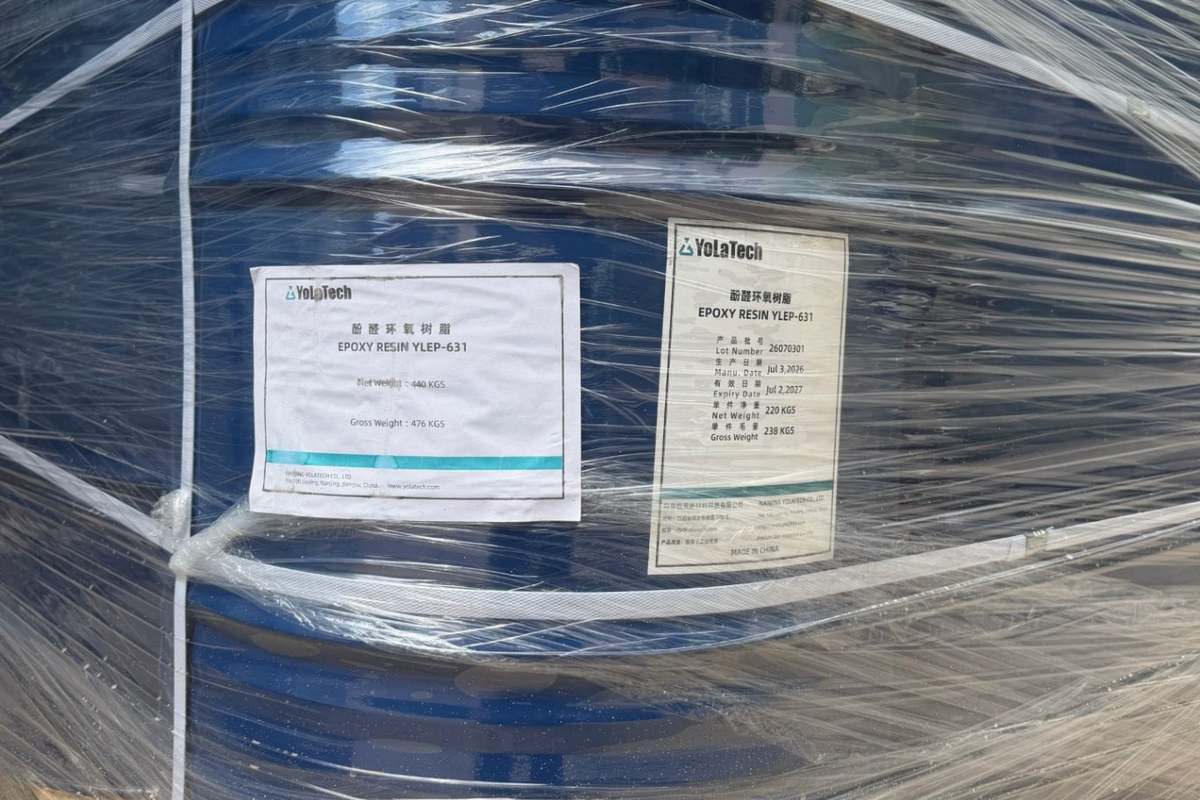
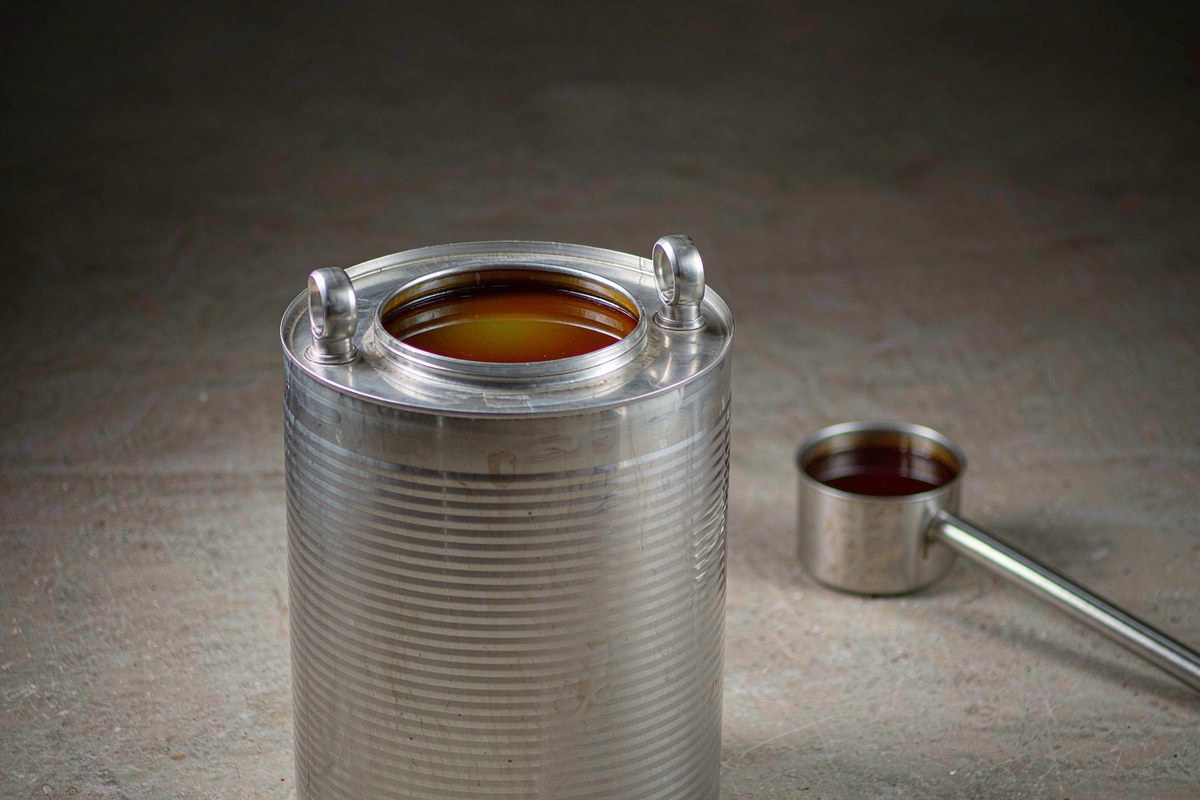
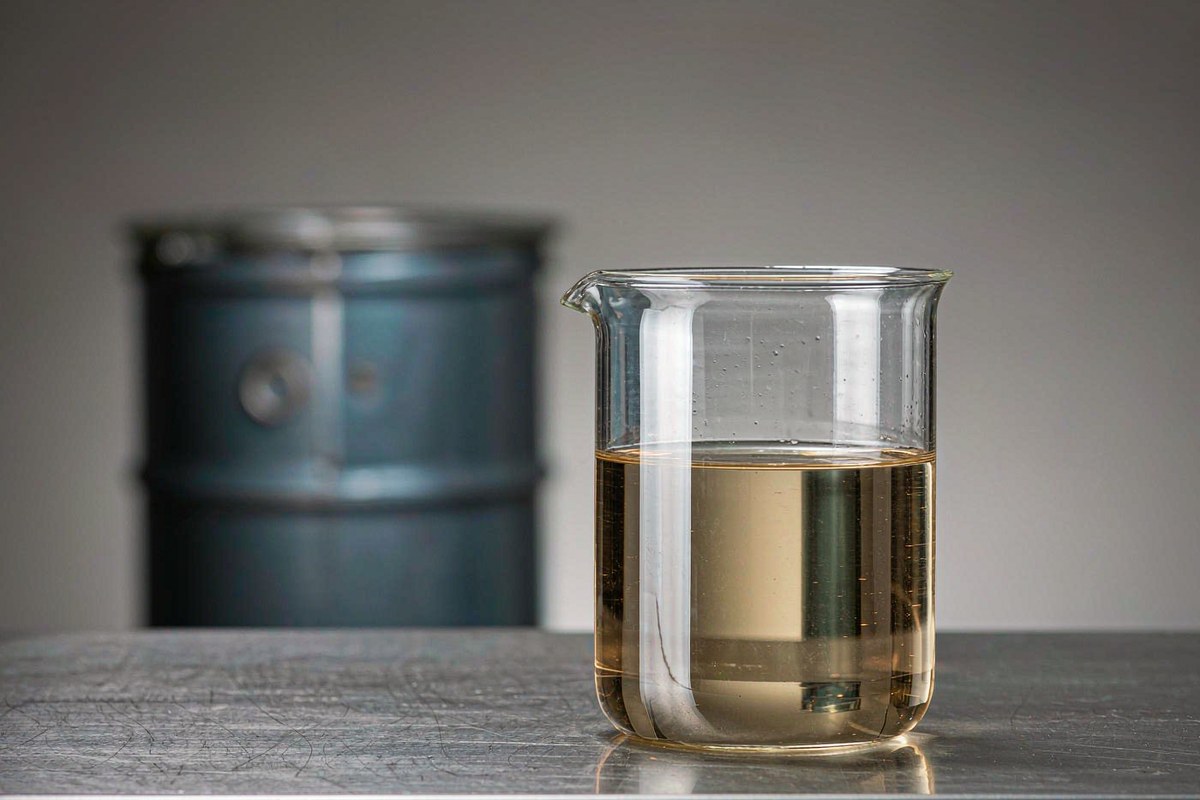
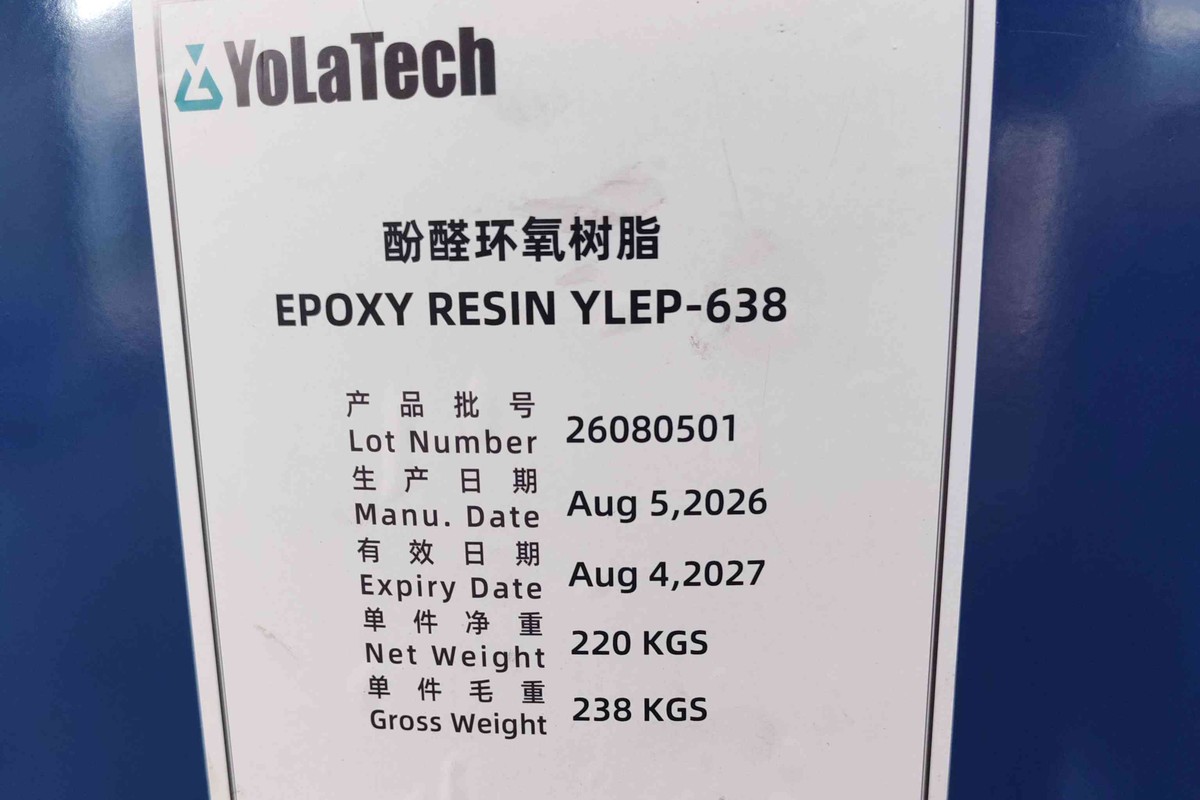
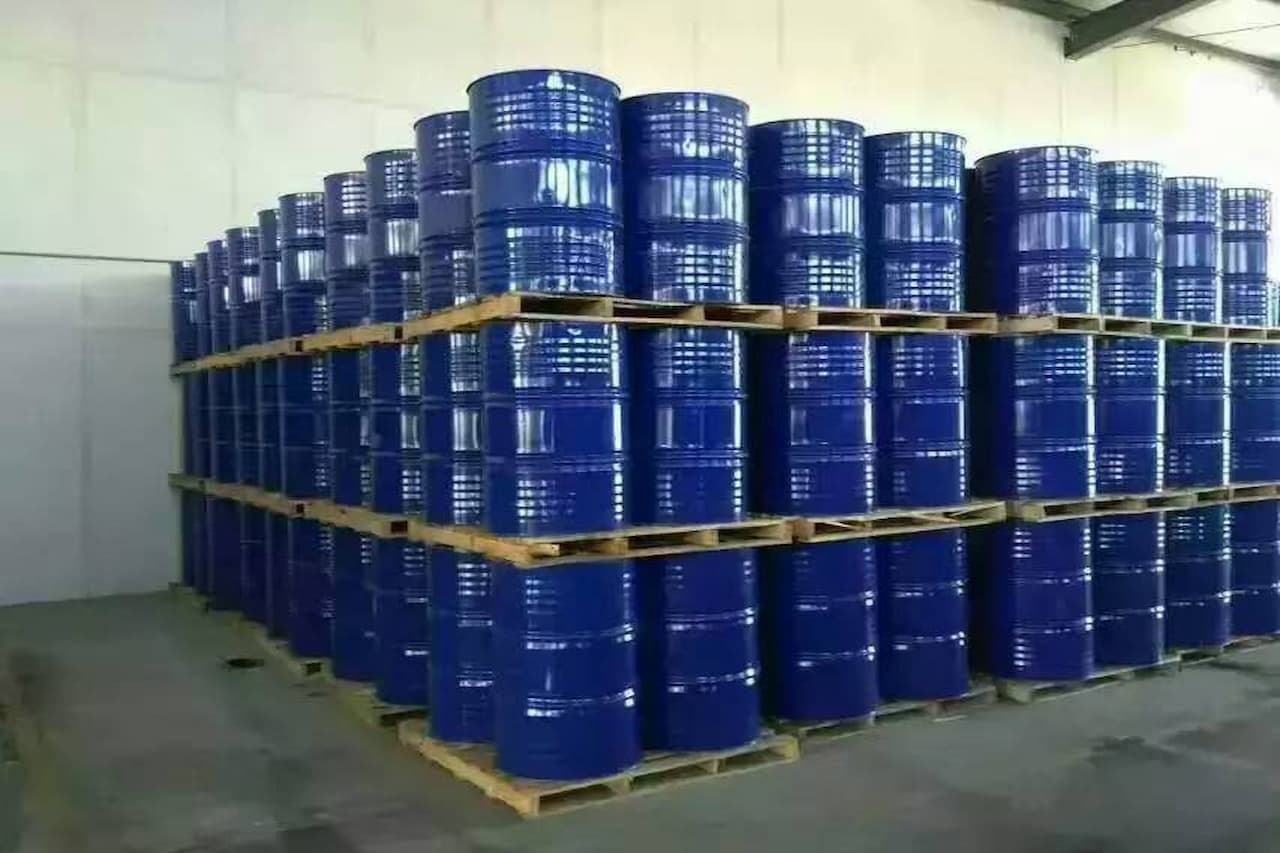
    Phenolic epoxy resin viscosity is a flow property that separates YLEP-631 from YLEP-638. YLEP-631 is a liquid measuring 1,100-1,700 mPa·s at 52 °C; YLEP-638 is semi-solid, with a 36-40 °C softening point. Their EEW windows overlap at 168-190 g/eq, so flow decides the grade. Both are packed in drums. Figure 1. A wrapped pallet of YLEP-631 drums. The label carries the lot number, net and gross weight, and the wrap keeps moisture out until the melt station. 1. Introduction Both grades are phenol-formaldehyde novolac resins glycidylated with epichlorohydrin, and both carry the same five-line application list. Choosing between them is a rheology decision, not a chemistry one. Viscosity governs how resin reaches fibre or fills a cavity. Too thick and the laminate keeps dry spots; too thin and the varnish drains before the press closes. Neither defect shows up on a certificate of analysis. This report compares the two specifications, derives what overlapping EEW windows do to hardener weight, and states which process window each grade serves. Values come from the product pages read on 2026-11-06 and from published industry data. 2. Materials and Methods: Test Basis for Phenolic Epoxy Resin Viscosity 2.1 Product identification and published specification Table 1 collects identity data and the open fields. Neither grade publishes a CAS number; only YLEP-631 publishes an epoxide count. Table 1. Identity data for YLEP-631 and YLEP-638 as published, accessed 2026-11-06. Item YLEP-631 YLEP-638 CAS number Not published Not published Epoxide groups 2.7 average Not published Appearance Colorless to yellowish liquid Liquid in table, semi-solid in text Package Drum Drum Shelf life At least 12 months At least 12 months Table 2 lists the rows that differ. The rest of the two pages is identical text, so the specification alone cannot settle a choice. Table 2. Published specification of YLEP-631 and YLEP-638. Property YLEP-631 YLEP-638 EEW 168-180 g/eq 170-190 g/eq Color, Gardner 3 maximum 3.0 maximum Hydrolyzable chlorine 500 ppm maximum 500 ppm maximum Flow property 1,100-1,700 mPa·s at 52 °C Softening point 36-40 °C Method named Temperature only None 2.2 Test methods and data sources Epoxy equivalent weight is determined by titration, and the lot COA outranks the catalogue window. ASTM D1652 and ISO 3001 describe the two routes. YLEP-631 viscosity is measured at 52 °C, the only flow number published. ASTM D445 covers the kinematic route; a rotational reading can sit a few hundred mPa·s away. Softening point is a ring-and-ball figure in European specifications, and the YLEP-638 page names no method. A drop-point result reads about 10 °C higher on the same sample. Incoming checks run in duplicate, with a third determination from another drum position when results disagree by more than 5 g/eq. No independent laboratory work was performed; every figure is published or arithmetic on one. 3. Results and Discussion: What Controls Phenolic Epoxy Resin Viscosity 3.1 Backbone, molecular weight and softening point Molecular weight distribution sets the flow gap, not the epoxide count. A novolac oligomer mixture carries a spread of chain lengths, and the long tail lifts softening point faster than average EEW. YLEP-631 averages 2.7 epoxy groups per molecule against two for a bisphenol A diglycidyl ether. That functionality explains the denser cured network; it does not explain the flow. Table 3. Softening point against melt viscosity at 150 °C for cresol novolac grades, published industry data. Softening point, °C Melt viscosity, Pa·s Ratio to 55 °C row 55 0.1 1.0 67 0.3 3.0 70 0.5 5.0 73 0.6 6.0 80 1.0 10.0 88 1.7 17.0 Across the 33 °C span of that table, melt viscosity rises 17-fold, about 2.4 times per 10 °C. That factor is calculated from the published pairs, and it is why a 4 °C band is worth arguing about. YLEP-638 sits at 36-40 °C, below the lowest row. Read against the curve, it is a solid that softens in a warm room and flows at 80 °C, which matches a melt tank rather than a drum pump. 3.2 Comparison with alternative systems A bisphenol A liquid is the default alternative, and the EEW overlap hides how differently the families behave. Table 4. Property comparison of the two novolac grades against bisphenol A epoxy resin. Property YLEP-631 YLEP-638 Bisphenol A liquid EEW 168-180 g/eq 170-190 g/eq 184-190 g/eq State at 25 °C Liquid Semi-solid Liquid Flow number 1,100-1,700 mPa·s at 52 °C 36-40 °C softening point 11,000-15,000 mPa·s at 25 °C Epoxide groups 2.7 Not published 2 Hydrolyzable chlorine 500 ppm maximum 500 ppm maximum Grade dependent Stoichiometry barely moves: a 168-190 g/eq window against roughly 184-190 g/eq is a few percent of hardener weight, inside a batch tolerance. Cured heat resistance does move. Crosslink density from 2.7 epoxides against two keeps modulus higher at 150 °C, and the same density is why elongation falls. For a thin part under 100 °C, the bisphenol A liquid usually wins on cost and toughness. Above that ceiling the novolac earns its price. 4. Formulation and Dosage Calculation Hardener weight follows one equation, phr being parts per hundred parts of resin by mass. phr = 100 × AHEW ÷ EEW A phenol novolac hardener at a 105 g/eq hydroxyl equivalent is a common laminate pairing. The figure is typical rather than universal; check the hardener TDS before freezing a recipe. Table 5. Stoichiometric hardener dosage in phr across the published EEW window, calculated from the equation above. Hardener 168 g/eq 174 g/eq 180 g/eq 190 g/eq Phenol novolac, 105 g/eq 62.5 60.3 58.3 55.3 DDS, 62.1 g/eq 37.0 35.7 34.5 32.7 DICY, 21.0 g/eq 12.5 12.1 11.7 11.1 Blending changes flow without rewriting the recipe. A 70/30 mass blend of YLEP-638 and YLEP-631 lands at 178.2 g/eq and moves the DICY figure from 11.7 to 11.8 phr. Filler loadings are quoted in phr and bought in weight percent. Silica at 250 phr is 71.4% by weight; a 70% target is 233 phr. Past 250 phr a planetary mixer stops wetting out and the job needs a press. 5. Processing Notes and Operating Window The operating window is narrower than the specification suggests: the only published flow number sits at a temperature no workshop holds all day. Warm YLEP-638 to 70-90 °C in a drum heater or melt tank. Below 60 °C the grade resists pumping. Hold YLEP-631 above 45 °C; an ambient pump curve has to be measured, not assumed. Filter the melt at 100 µm before it meets the hardener. Degas a filled mix for 10-15 min at 5 mbar. Air in 250 phr of silica does not travel. Size the batch before trusting a pot life; 5 kg and 50 kg do not share a gel time. Without a melt line, a solution type phenolic epoxy resin avoids the tank, at the cost of solvent recovery. A reactive diluent such as 16-hexanediol diglycidyl ether YLD-6008 cuts viscosity without solvent, but lowers crosslink density and the heat resistance that justified a novolac. Two habits prevent most of the trouble. Keep the melt covered, since a wet novolac foams under vacuum. Log tank temperature every batch; a 10 °C drift moves melt viscosity by about 2.4 times. Figure 2. The YLEP-638 drum label: lot number, manufacture and expiry dates, 220 kg net and 238 kg gross. Log the lot beside the tank temperature. 6. Applications Both pages list five end uses, and the split follows the process rather than the market. Table 6 sets out which grade carries flow. Table 6. Process role of each grade across the five published applications. Application YLEP-631 YLEP-638 Laminates and CCL Varnish at 40-60% solids High-build varnish, needs solvent Potting and casting Carries filler to 250 phr Hot pour above 70 °C Adhesives Metal and ceramic bonds Film and paste, hot applied Coatings Solvent-borne, 30-50% solids High-solids bake Composites Warm RTM and wet winding Prepreg and hot-melt film Laminate work is the clearest case. A varnish on the liquid grade holds 40-60% solids and still passes the tower; the same solids on the semi-solid grade need a stronger solvent. Figure 3. Four drums on one pallet at the loading bay; a casting campaign is usually sized in pallets, not kilos. 7. Limitations and Material Verification 7.1 Known limits and unsuitable processes Ambient hand lay-up suits neither grade. The liquid grade is workable at 52 °C, not at workshop temperature, and the semi-solid must be melted before it wets glass. Nor is either grade an electronic material. A 500 ppm hydrolyzable chlorine ceiling suits laminates; a customer needing single-digit chloride must ask for another grade. Two details need resolution before either grade enters a drawing. Appearance is listed as liquid for YLEP-638 while the text calls it semi-solid; trust the text, since a 36-40 °C softening point implies a solid at ambient. The softening method is unstated, and a drop-point number would read 46-50 °C. No CAS number is published either, so a customs or REACH dossier must rest on the supplier declaration. 7.2 Incoming inspection, packaging and storage Incoming inspection covers three numbers. EEW is determined by titration against the lot COA, alongside Gardner color and hydrolyzable chlorine. Reject a lot outside the EEW window, because every phr in Table 5 shifts with it. Packaging is a drum, with at least 12 months from manufacture in the original packing. A drum reopened repeatedly collects moisture at the headspace; use it first. Storage is the standard routine: ventilated area, away from flame and sunlight, cap closed after use. Safety data sits in the MSDS; both grades are skin sensitisers. Any RoHS, REACH or UL 94 statement has to be verified against current certificates, since nothing in a description implies certification. 8. Frequently Asked Questions Does YLEP-631 drop in for YLEP-638 without reformulation? No. Hardener weight is unchanged, but flow is not: a 168-180 g/eq liquid replaces a 36-40 °C semi-solid, so a melt line becomes a pump line. Reformulate the solvent first. What is the viscosity of YLEP-631 at room temperature? Not published. The only flow number is 1,100-1,700 mPa·s at 52 °C, so a 25 °C pump curve must be measured on your own lot. Why does YLEP-638 thin out faster than expected when warmed? Melt viscosity falls about 2.4 times per 10 °C of softening point. A tank set 15 °C high can halve working viscosity and let the mix drain off a wall. Can the two grades be blended to hit a target softening point? Yes. A 70/30 mass blend lands at 178.2 g/eq and its softening point falls between the components; verify by ring-and-ball rather than by calculation. Which hardener suits a 36-40 °C softening point novolac? DDS at 34.5-37.0 phr or DICY at 11.7-12.5 phr. A phenolic novolac hardener at 55-62 phr gives the highest heat resistance and the shortest pot life. Is 500 ppm hydrolyzable chlorine low enough for electronics? For a laminate, usually. For an encapsulant touching aluminium bond pads, no; ask for a lower-chloride grade and confirm it on the COA. 9. Conclusions YLEP-631 and YLEP-638 share a novolac backbone and overlapping EEW windows, so stoichiometry does not separate them. State does: 1,100-1,700 mPa·s at 52 °C against a 36-40 °C softening point. Hardener demand stays within a few percent either way, 55.3 to 62.5 phr for a phenolic novolac. Flow, filler tolerance and B-stage behaviour are what a process trial has to measure. Pick the liquid grade when the mix must move at moderate temperature, the semi-solid when the part needs a dry stage before cure. Confirm the softening method before the first order. 10. References 1. Yolatech product page, YLEP-631: https://www.yolatech.com/pne-type-phenolic-epoxy-resin-ylep-631 2. Yolatech product page, YLEP-638: https://www.yolatech.com/pne-type-phenolic-epoxy-resin-ylep-638 3. Yolatech product page, bisphenol A grades: https://www.yolatech.com/bisphenol-a-epoxy-resin 4. Technical Data Sheet, Material Safety Data Sheet and Certificate of Analysis (COA) for YLEP-631 and YLEP-638, Yolatech (available on request). 5. ASTM D1652, epoxy content of epoxy resins (EEW); ISO 3001, determination of epoxy equivalent. 6. ASTM D445, kinematic viscosity; ASTM D1544, Gardner color; ASTM E203, water by Karl Fischer.
    Read More
  • Solution Type Phenolic Epoxy Resin: 80% Solids Dosage Math
    Solution Type Phenolic Epoxy Resin: 80% Solids Dosage Math
    Nov 06, 2026
    Solution type phenolic epoxy resin is a multifunctional novolac epoxy supplied as an 80% solids solution, in EEW 170-220 g/eq grades on solids. Two grades are listed, YLEP-210-A80 and YLEP-180-K80. Hardener dosage belongs on the solution supplied, not on solids. Dilution adds 25% to the working EEW. Figure 1. Drum supply of an 80% solids phenolic epoxy solution, the form most impregnation lines receive. 1. Introduction Novolac epoxy starts from a phenol-formaldehyde condensate, not from bisphenol A. Epoxidising that condensate gives more than two glycidyl groups per molecule, and the cured network reaches higher crosslink density than a bisphenol A system. Heat, solvent and chemical resistance and dimensional stability rise with that density. Brittleness rises too, and adhesion to copper foil falls. Formulators blend in a bisphenol A resin for toughness and adjust cure for copper grip. Both grades on the product page ship at 80% solids, the form impregnation lines actually buy. That number sits between the datasheet and every downstream figure: hardener weight, bath viscosity, volatile content, cost per equivalent. Values below come from the public solution type phenolic epoxy resin product page, read on 2026-11-06; calculated figures are labelled as such. 2. Materials and Methods: Solution Type Phenolic Epoxy Resin Grades 2.1 Product Identification and Specification Table 1 reproduces both grades as published, without rounding. Table 1. Published specification of the two 80% solids grades, EEW quoted on resin solids. Grade EEW (g/eq) Viscosity (mPa·s) N.V. (%) YLEP-210-A80 200-220 1000-4000 80±1 YLEP-180-K80 170-190 200-500 80±1 No CAS number, formula, solvent identity or functionality is published for either grade; those fields stay open rather than being imported. 2.2 Test Methods and Data Sources EEW for a solution grade is normally determined by titration according to ASTM D1652 or ISO 3001, and quoted per gram of solids. Viscosity is rotational, measured at 25 °C. Colour follows ASTM D1544; water follows ASTM E203. Calculated values carry their formula. Values labelled empirical are practice-based starting points and were not run in triplicate here. Where the page is silent, the text says not published. 3. Results and Discussion 3.1 Structure and Reactivity: Why 80% Solids Moves Dosage Dilution is where dosage errors start. The published 200-220 g/eq describes resin solids, while the drum holds 20% solvent. Per gram of liquid as supplied the equivalent weight becomes 250-275 g/eq, from 200 ÷ 0.80 and 220 ÷ 0.80. YLEP-180-K80 moves the same way, from 170-190 g/eq on solids to 212.5-237.5 g/eq as supplied. Equivalents per kilogram run inverse: 4.00 eq/kg at 250 g/eq, 3.64 eq/kg at 275 g/eq, 4.71 eq/kg for K80 at 212.5 g/eq. A 90% bisphenol A solution such as YLE-128A90 lands at 204-216 g/eq as supplied, which is 4.6-4.9 eq/kg. The phenolic grades therefore deliver fewer equivalents per kilogram of purchased liquid. That gap is paid in freight as well as resin. Substitution on the ring shifts the balance inside the family. CNE grades carry a methyl group ortho to the ether linkage and beat PNE grades on water resistance and melt viscosity, while BNE grades reach a DDS-cured Tg of 224 °C. Neither solution grade states its functionality, and 2.7 epoxy groups per molecule is published only for YLEP-631. 3.2 Comparison with Alternative Systems Table 2 puts both solution grades beside the nearest solid novolac and a standard bisphenol A solution, using published values only. Table 2. Attribute comparison with a solid novolac and a 90% bisphenol A solution. Attribute YLEP-210-A80 YLEP-638 solid YLE-128A90 Delivery form 80% solution Semi-solid 90% solution EEW on solids, g/eq 200-220 170-190 184-194 Solids content, % 80±1 100 90±1 EEW as supplied, g/eq 250-275 170-190 204-216 Viscosity 1000-4000 mPa·s 36-40 °C softening ≤1000 mPa·s Hydrolyzable chlorine Not published ≤500 ppm Not published Epoxy groups per molecule Not published Not published 2 Main use on datasheet Laminate varnish High-temperature laminate General laminating The trade-off sits in two rows. YLEP-638 gives the same novolac backbone at 170-190 g/eq with no solvent to evaporate, but its 36-40 °C softening point forces a melt step and hydrolyzable chlorine is capped at 500 ppm. In practice a plant with a solvent line prefers the solution; one without should stay with flake. Solvent is never free. At a density near 1.05-1.10 kg/L, 20% solvent works out to roughly 210-220 g/L of volatile content. 4. Formulation and Dosage Calculation: phr on the As-Supplied Solution Three equations cover the work. As-supplied EEW equals solids EEW divided by the solids fraction, EEW_s = EEW_solids ÷ (N.V. ÷ 100). Amine demand follows phr = 100 × AHEW ÷ EEW_s, with AHEW at 20.6 g/eq for DETA, 21.0 g/eq for dicyandiamide and 62.1 g/eq for diaminodiphenylsulfone. Table 3. Hardener demand per 100 g of solution, calculated from as-supplied EEW. EEW as supplied (g/eq) DETA, phr DICY, phr DDS, phr 212.5 (K80 low) 9.69 9.88 29.22 237.5 (K80 high) 8.67 8.84 26.15 250 (A80 low) 8.24 8.40 24.84 262.5 (A80 middle) 7.85 8.00 23.66 275 (A80 high) 7.49 7.64 22.58 At 250 g/eq the figures read 8.24 phr of DETA and 8.40 phr of DICY per 100 g of solution. At 275 g/eq they fall to 7.49 and 7.64 phr, a 9% swing across one band. Buy the narrowest band the supplier will commit to, or dose against the COA. The common error is skipping the dilution. Treating YLEP-210-A80 as a 210 g/eq resin gives 9.81 phr of DETA against a correct 8.24 phr, a 19% amine excess that plasticises the network and raises water uptake. If a batch stays tacky, check whether dosage was figured on solids before adding accelerator. Thinning is arithmetic. Per 100 kg of 80% solution there are 80 kg of solids, and the solvent needed to reach a target N.V. is 80 ÷ (target ÷ 100) − 100. Table 4. Solvent addition from 100 kg of 80% solution at 200 g/eq solids. Target N.V. (%) Solvent to add (kg) Final batch (kg) EEW as supplied (g/eq) 75 6.7 106.7 266.7 70 14.3 114.3 285.7 65 23.1 123.1 307.7 60 33.3 133.3 333.3 Blending often beats thinning. Equal masses of the two grades give 2 ÷ (1 ÷ 250 + 1 ÷ 212.5) = 230 g/eq as supplied. Viscosity follows a logarithmic mixing rule, ln η = Σ w ln η, which for 2500 and 350 mPa·s at equal weights predicts about 935 mPa·s. 5. Processing Notes and Operating Window The window is set by solvent loss, not by the resin. • Mix at 30-40 °C; a cold solution traps air that shows up as pinholes. • Hold the bath at 20-25 °C. Every 10 °C of extra heat halves the working life of an accelerated DICY system. • Measure solids on the bath, not only on the drum. N.V. can climb several points in one shift. • Stage the cure: 30 min at 90 °C before gel. Straight to 160 °C blisters the laminate unless the section is thin. • Filter before use; novolac solutions throw a sediment that scorches under a hot press. Figure 2. Impregnation bath running an 80% solids novolac varnish, with solids checked on the bath. Pot life at 25 °C is typically 8-24 h for a DICY varnish and minutes for a DETA mix, so DETA belongs in small batches. A bath left open all afternoon will not behave like the morning sample even at the same N.V. 6. Applications Six applications are listed, and the two grades do not serve them equally. Table 5. Application map for the two grades, from the list on the product page. Application Function of the solution Grade fit Process note Copper-clad laminate Impregnation varnish YLEP-210-A80 Hold N.V. to control flow Electronic laminate Prepreg resin with DICY Both grades Control stage B Heat-resistant adhesive Structural bondline YLEP-210-A80 Cure above 160 °C Heat-resistant coating Baked or ambient film YLEP-180-K80 Low band suits spray Civil engineering Solvent-borne primer YLEP-180-K80 Long open time Electronic ink Vehicle for screen ink YLEP-210-A80 Solvent balance sets levelling Copper-clad laminate takes YLEP-210-A80, where the higher EEW tolerates a stiffer varnish. Spray and primer work takes YLEP-180-K80, whose 200-500 mPa·s band atomises without extra thinning. Figure 3. Heat-resistant coating applied from a thinned solution; the K80 grade sprays at supplied viscosity. 7. Limitations and Material Verification 7.1 Known Limitations and Where These Grades Do Not Fit These are solutions, which rules out several jobs. Solvent-free casting is not one: 20% volatile content boils at gel and leaves voids in a thick section. Neat metal bonding is a poor fit too, because the cured novolac is brittle and grips copper less firmly than bisphenol A. Three fields are unpublished and should be confirmed before a specification is frozen: solvent identity, functionality and hydrolyzable chlorine. Swapping a glycol ether for an aromatic solvent changes water pick-up and evaporation, so check with the supplier before the swap; the press will show blisters otherwise. The EEW basis is the fourth check. If the COA states EEW as supplied, do not divide by 0.80 again; that under-doses hardener by about 20% and leaves a tacky laminate. 7.2 Incoming Inspection, Packaging, Storage and Safety Incoming inspection covers four numbers per lot: EEW by ASTM D1652 or ISO 3001, viscosity by ASTM D445 at 25 °C, colour by ASTM D1544 and water by ASTM E203. Keep a 200 g sample per batch; it settles arguments later when a lot drifts by 3 g/eq. Packaging is drums, with at least 12 months shelf life from manufacture in original packing at ambient temperature. Store ventilated, away from flame and direct sunlight, and close the cap after use: an open drum skins over. Safety information sits in the MSDS and the TDS governs the specification. Confirm handling, labelling and transport classification before shipping, and treat any RoHS or REACH statement as needing documentary confirmation rather than as a granted certification. 8. Frequently Asked Questions What does 80% solids mean for hardener dosage? The labelled EEW is divided by 0.80 before use. YLEP-210-A80 at 200-220 g/eq on solids becomes 250-275 g/eq as supplied, so DETA demand drops from 9.81 to 8.24 phr per 100 g. Can YLEP-210-A80 replace a 100% solids novolac one for one? No. Swapping it for a 170-190 g/eq solid grade removes about a quarter of the reactive mass per kilogram, so the batch needs more resin and less hardener. Which grade suits a copper-clad laminate varnish? YLEP-210-A80 is the usual starting point. Its higher EEW gives a stiffer prepreg, and the 1000-4000 mPa·s band leaves room for a flow promoter. Does the solvent change pot life? Indirectly. Solvent does not react, but it dilutes the reactants and slows the temperature rise, so a thinned mix can look long-lived in the bath and still gel quickly as a thin film. What should the COA report for epoxy equivalent weight? The value, the basis and the method. Ask for EEW in g/eq stating whether it refers to resin solids or to the solution as supplied, plus the titration standard used. Is a 50/50 blend of the two grades practical? Yes, and it is common. The blend lands near 230 g/eq as supplied with viscosity around 935 mPa·s, which suits lines that cannot run the 4000 mPa·s end of YLEP-210-A80. 9. Conclusions Two 80% solids novolac grades cover EEW 170-220 g/eq on solids, which is 212.5-275 g/eq as supplied. Every hardener figure has to be computed on the as-supplied basis; skipping it over-doses amine by 19%. The grades buy heat and solvent resistance with brittleness, lower copper adhesion and 20% volatile content. Where solvent cannot be tolerated, the solid novolac route on the phenolic epoxy resin range page remains correct, and the solution type bisphenol A epoxy resin line covers work needing more equivalents per kilogram. 10. References Yolatech product page: https://www.yolatech.com/solution-type-phenolic-epoxy-resin (accessed 2026-11-06). Technical Data Sheet for YLEP-210-A80 and YLEP-180-K80, 80% solids phenolic epoxy solution (available on request). Certificate of Analysis (COA) for YLEP-210-A80, lot-specific EEW and solids (available on request). ASTM D1652 and ISO 3001, titration routes for the epoxy content of epoxy resins (EEW). ASTM D445, kinematic viscosity; ASTM D1544, Gardner color of transparent liquids. ASTM E203, water content by Karl Fischer titration; ISO 9702, amine group nitrogen content of amine epoxide hardeners.
    Read More
  • Liquid Phenolic Epoxy Resin YLEP-631: Seven Field Failures
    Liquid Phenolic Epoxy Resin YLEP-631: Seven Field Failures
    Oct 20, 2026
    Liquid phenolic epoxy resin YLEP-631 is a PNE-type novolac grade with 2.7 epoxy groups per molecule. Its published window is an EEW of 168-180 g/eq, a viscosity of 1100-1700 mPa·s at 52 °C and hydrolyzable chlorine below 500 ppm. Seven recurring failure patterns cover most field complaints about it. Figure 1. YLEP-631 pours warm and ships in steel drums; the color sits inside the Gardner limit of 3. 1. Introduction Heat service above 150 °C is the usual reason a formulator leaves a bisphenol A liquid for a novolac epoxy; the same move narrows the process window. YLEP-631 comes from a phenol-formaldehyde novolac glycidylated with epichlorohydrin; the oligomer mixture averages 2.7 epoxide rings per molecule against a fixed two for bisphenol A diglycidyl ether. Diagnosis first. Dosage second. 2. Materials and Methods: Identity and Test Basis for Liquid Phenolic Epoxy Resin YLEP-631 The product page publishes five specification items and a functionality statement; Table 1 sets identity beside them. 2.1 Product Identification and Published Specification Three gaps matter for procurement: no CAS number, density or flash point is published, so transport classification leans on the TDS and MSDS. Table 1. Identity and published specification of YLEP-631. Item Information CAS No. Not published; confirm on the current TDS / MSDS / COA Appearance Colorless to yellowish liquid Color, Gardner 3 maximum EEW, g/eq 168-180 Viscosity 1100-1700 mPa·s at 52 °C Hydrolyzable chlorine, ppm 500 maximum Epoxy functionality 2.7 groups per molecule (as published) Shelf life At least 12 months from manufacture in the original drum 2.2 Test Methods and Data Sources Values in Table 1 are reproduced as published, not re-measured; the lot COA overrides the catalogue window. Epoxy equivalent weight is determined by titration; ASTM D1652 and ISO 3001 describe the two routes in common use. Viscosity is quoted at 52 °C because the grade thickens sharply as it cools; a 25 °C reading is not comparable without a measured curve. Color follows ASTM D1544; hydrolyzable chlorine is a single ceiling, which suits buyers screening lots for ionic contamination. Incoming checks are usually performed in duplicate at two positions in the drum, with a third determination (n = 3) when the pair disagrees. 3. Results and Discussion: Where a 2.7-Functionality Resin Fails Two numbers set the operating window for YLEP-631: 2.7 epoxy groups per molecule and a viscosity specified at 52 °C. 3.1 Structure and the Reactivity Penalty Per kilogram, an EEW of 168-180 g/eq delivers 5.56-5.95 epoxy equivalents; a 184-190 g/eq bisphenol A liquid delivers 5.26-5.43. The gap is 5 to 10 percent. The novolac earns its price elsewhere: 2.7 reactive ends per molecule build network nodes faster than a difunctional resin can, lifting heat deflection and hot wet strength. The same 2.7 ends cause most field failures: more heat per unit mass during cure, less elongation, a shorter margin between workable viscosity and gel. Functionality buys heat resistance with process time. Moisture adds a second penalty: water picked up in a humid storeroom consumes epoxide and feeds the amine blush that spoils thin coatings; drums opened through a coastal summer gel early. 3.2 Field Failure Modes: Symptom, Root Cause, Countermeasure Seven patterns cover most failures reported for systems built on this grade, and each maps to a published number in Table 1. Table 2. Failure modes reported for liquid phenolic epoxy resin YLEP-631 systems. Observed symptom Likely root cause Countermeasure Viscosity creep or gel in a partly used drum Repeated opening in humid air; moisture starts headspace reaction Reseal at once, oldest stock first, re-check at 52 °C Runaway exotherm or char in thick castings 2.7 epoxides per molecule release more heat per unit mass Cast in layers, chill the mould, use a slower amine Cracks or brittle fracture after demoulding High crosslink density, low elongation Blend 20-30 phr of a difunctional liquid, ramp the cure Dry spots on fibre in laminates Bath cooled below the 52 °C reference Hold the bath at 55-60 °C and log it Ionic leakage or copper corrosion Chlorine ceiling is 500 ppm, not zero Screen lot COA; extraction-test the laminate Amine blush or oily film on coatings Moisture condensing on a cold substrate Keep substrate 3 °C above dew point, thin coats Batch color drift in clear parts Gardner 3 maximum allows a wide visual window Agree an internal limit tighter than 3 per lot Two are thermal, two are moisture or stoichiometry errors, the rest storage or specification gaps. Each costs more to fix than the resin. 3.3 Comparison with Alternative Systems Table 3 places YLEP-631 beside four alternatives, using published values only. Table 3. Property comparison of YLEP-631 with alternative epoxy systems (published values). Property YLEP-631 YLEP-638 YLE-128 (DGEBA) YLE-170 (BPF) YLSE-721 EEW, g/eq 168-180 170-190 184-190 160-180 110-125 Form at 25 °C Liquid Semi-solid Liquid Liquid Liquid Viscosity 1100-1700 mPa·s at 52 °C Not published; softening point 36-40 °C 11000-15000 mPa·s at 25 °C 2000-5000 mPa·s at 25 °C 6000-11000 mPa·s at 25 °C Epoxy groups per molecule 2.7 Above 2 2 2 4 YLE-128 bisphenol A epoxy resin stays the reference for room-temperature work: no heating, familiar dosage, two epoxides, a lower heat ceiling. The semi-solid sibling YLEP-638 novolac grade differs in one number: a 36-40 °C softening point instead of a pourable viscosity. YLE-170 bisphenol F resin runs at 2000-5000 mPa·s without warming and shares the 160-180 g/eq bracket but builds a less dense network. YLSE-721 tetrafunctional resin, a glycidylamine at 110-125 g/eq, is the harder-edged route: four epoxides, higher viscosity even at 25 °C, a Gardner allowance of 10. Color is a selection criterion, not a detail, for visible parts. 4. Formulation and Dosage Calculation Stoichiometric hardener demand follows one line, phr being parts per hundred of resin by weight. phr = 100 × AHEW ÷ EEW Table 4 works the equation across the published EEW window. Table 4. Stoichiometric hardener dosage for YLEP-631 across the published EEW window. Hardener Equivalent weight, g/eq phr at EEW 168 phr at EEW 174 phr at EEW 180 DETA (CAS 111-40-0), theoretical AHEW 20.6 12.3 11.8 11.4 MACM (CAS 6864-37-5), published AHEW 60 35.7 34.5 33.3 YLH-9101 (modified amine), published AHEW 92 54.8 52.9 51.1 MHHPA (CAS 25550-51-0), anhydride at ratio 0.85 143.0 85.1 82.2 79.4 Worked example: 2 kg at 174 g/eq takes 100 × 92 ÷ 174 = 52.9 phr of YLH-9101 modified amine, or 1058 g weighed separately. Blends move the target: seventy parts at 174 g/eq with thirty at 170 g/eq give a blend EEW of 172.8 g/eq, and a DETA demand of 11.9 phr. Treat every figure as a starting point: delivered EEW drifts inside its window, and a 10 g error is tolerable in 2 kg but is five percent in a 200 g lab mix. Post-cure belongs in the decision: heat resistance appears only after an elevated-temperature schedule; the current TDS governs the steps. 5. Processing Notes and Operating Window Warming the drum is the first operation, and where most batches go wrong. • Heat indirectly with a water bath or drum heater at 50-60 °C; open flame is out, per the product page. • A 200 L drum needs hours on the heater before the bulk reaches temperature. • Log viscosity at 52 °C against 1100-1700 mPa·s before charging the bath or the mixer. • Weigh resin and hardener by mass, never by volume, and degas 10-15 minutes under vacuum for sections above about 25 mm. • Ramp the cure: hold near 80 °C before climbing to 150-180 °C so the exotherm does not stack. Figure 2. A heater jacket warms the drum for decanting; indirect heat keeps the wall below the reaction point. 6. Applications Six routes appear on the product page, and each spends a different part of the specification. Electronic laminates use the dense network and the 500 ppm chlorine ceiling, watching ionic extraction on fine-line boards. Heat-resistant adhesives take hot strength from the tighter mesh but fail as brittle joints under impact. High-temperature coatings gain chemical resistance after post-cure and lose finish to amine blush on cold substrates. Composites wet out fibre at 1100-1700 mPa·s, but only while the bath holds 55-60 °C. Potting and casting risk exotherm cracking in thick sections; civil engineering grouts and epoxy vinyl inks take chemical resistance from the same network. None runs neat at room temperature; each starts from a warmed bath, a heated substrate or a blend. Figure 3. Wet lay-up shows the 52 °C viscosity first: fabric must be wet out while the bath holds temperature. 7. Limitations and Material Verification 7.1 Known Limitations and Unsuitable Cases This is not the resin for room-temperature hand lay-up, for impact-critical parts, or for flame retardance without additives. The molecule carries neither phosphorus nor bromine; a halogen-free flame-retardant laminate needs a co-resin such as YLDP-320 phenolic flame-retardant resin at 3.0% phosphorus. Viscosity exists only at 52 °C. If your process runs at 25 °C, ask for a measured curve instead of extrapolating. Clear parts need a color agreement tighter than Gardner 3; two compliant lots can look visibly different side by side. 7.2 Incoming Inspection, Packaging, Storage and Safety Incoming inspection should verify EEW by titration against the lot COA, plus color and hydrolyzable chlorine. Reject a lot outside 168-180 g/eq; every dosage moves with it. Storage is standard: well-ventilated, away from flames and direct sunlight, cap closed after use, oldest stock first. Shelf life is at least 12 months in the original drum. Safety information lives in the MSDS. Novolac epoxies are skin sensitisers; gloves and eye protection belong in the written procedure. 8. Frequently Asked Questions Why does a liquid grade need warming before use? YLEP-631 is liquid at 52 °C with 1100-1700 mPa·s, but the novolac backbone thickens sharply as temperature falls. Warming to 50-60 °C restores a workable viscosity. How is the hardener ratio calculated for a 168-180 g/eq novolac? phr = 100 × AHEW ÷ EEW. With MACM cycloaliphatic diamine at AHEW 60 g/eq, 100 g of resin at 174 g/eq takes 34.5 g of hardener. Use the lot COA value, not the catalogue midpoint. What causes cracking in thick YLEP-631 castings? Crosslink density: 2.7 epoxides per molecule build a rigid, low-elongation network, and a thick section adds thermal stress from its own exotherm. Cast in layers, ramp the cure, and consider 20-30 phr of a difunctional liquid. Is 500 ppm hydrolyzable chlorine low enough for electronic laminates? A ceiling, not a guarantee: a lot at 480 ppm passes specification yet may still run high for a fine-line board. Screen each lot COA and extraction-test the laminate when ionic cleanliness is critical. Can YLEP-631 be blended with a bisphenol A resin? Yes, and in practice it usually is. Blending cuts viscosity and cost while the novolac fraction keeps the heat resistance. Recalculate the blend EEW from 100 ÷ (sum of parts ÷ EEW of each) before fixing the hardener weight. Does YLEP-631 provide flame retardance? No. The molecule contains neither bromine nor phosphorus; flame retardance must come from a hardener, a co-resin or an additive, with any RoHS or UL 94 claim verified against current certificates. 9. Conclusions Liquid phenolic epoxy resin YLEP-631 is specified at 168-180 g/eq, 1100-1700 mPa·s at 52 °C, Gardner 3 maximum and 500 ppm hydrolyzable chlorine, with 2.7 epoxy groups per molecule. Its failure history is a history of that functionality: exotherm and brittleness in cure, viscosity and moisture in storage, ionic chlorine in electronics. Used warm, dosed from the lot COA and post-cured on schedule, the grade delivers the heat resistance it is priced for. 10. References 1. Product page, PNE type phenolic epoxy resin YLEP-631, Yolatech: https://www.yolatech.com/pne-type-phenolic-epoxy-resin-ylep-631 (accessed 2026-10-20). 2. Product page, PNE type phenolic epoxy resin YLEP-638, Yolatech: https://www.yolatech.com/pne-type-phenolic-epoxy-resin-ylep-638 (accessed 2026-10-20). 3. Product pages, bisphenol A epoxy resin YLE-127/YLE-128 and bisphenol F epoxy resin YLE-170, Yolatech: https://www.yolatech.com/bisphenol-a-epoxy-resin / https://www.yolatech.com/bisphenol-f-epoxy-resin 4. Technical Data Sheet, Material Safety Data Sheet and Certificate of Analysis for YLEP-631, Yolatech (available on request). 5. ASTM D1652 (epoxy content, EEW) with ISO 3001 (epoxy equivalent), together with ASTM D1544 (Gardner color), ASTM D445 (kinematic viscosity) and ASTM E203 (Karl Fischer water).
    Read More
  • Phenolic Novolac Epoxy Resin: YLEP-638 Selection Guide
    Phenolic Novolac Epoxy Resin: YLEP-638 Selection Guide
    Oct 13, 2026
    Phenolic novolac epoxy resin YLEP-638 is a multifunctional epoxy resin from phenol-formaldehyde novolac and epichlorohydrin. Its published specification lists an epoxy equivalent weight of 170-190 g/eq, Gardner color 3.0 maximum, a softening point of 36-40 °C and hydrolyzable chlorine below 500 ppm. Figure 1. YLEP-638 phenolic novolac epoxy resin is supplied in steel drums and is a semi-solid at room temperature; the printed label carries the lot number, manufacturing date and expiry date. 1. Introduction Continuous service above roughly 150 °C is where a difunctional bisphenol A epoxy resin stops being the obvious answer. Phenolic novolac epoxy resin trades easy flow for a denser cured network. Built on a phenol-formaldehyde novolac core condensed with epichlorohydrin, YLEP-638 carries more than two epoxide rings per molecule on average. Published data on the sibling grade YLEP-631 records an average of 2.7 epoxy groups per molecule, against two for bisphenol A diglycidyl ether. Specification values below are quoted from the public Yolatech product pages, derived constants are marked calculated, and every dosage figure is a worked example rather than a recipe. Selection comes first. Dosage comes second. 2. Materials and Methods: Identification of Phenolic Novolac Epoxy Resin YLEP-638 The YLEP-638 product page publishes five specification items and a five-line application list. Table 1 sets identity data beside those published values. 2.1 Product Identification and Specification Table 1 collects identity data from the product page and flags the derived rows. Table 1. Identity and published specification of phenolic novolac epoxy resin YLEP-638. Item Information Product name PNE type phenolic epoxy resin YLEP-638 Chemical family Phenolic novolac (PNE) multifunctional epoxy resin CAS No. Not published; confirm on the current TDS / MSDS / COA Appearance Colorless to yellowish liquid (as published) Color, Gardner 3.0 maximum EEW, g/eq 170-190 Softening point (SP), °C 36-40 Hydrolyzable chlorine, ppm 500 maximum Epoxy functionality Above 2 (YLEP-631 published at 2.7) Packaging Drum Shelf life At least 12 months in original packing 2.2 Test Methods and Data Sources Values in Table 1 are quoted as published. No independent laboratory work was performed for this report. Epoxy equivalent weight is determined by titration, and the figure in the current TDS governs. ASTM D1652 and ISO 3001 describe the two common routes. Color is determined by ASTM D1544. Viscosity of the liquid comparator grades is measured at 25 °C; the YLEP-631 figure is quoted at 52 °C because that grade is not free-flowing at ambient. Hydrolyzable chlorine is given as one ceiling instead of a range, which matters where ionic chloride drives copper corrosion. Water content is normally found by Karl Fischer titration. Incoming checks on a novolac epoxy lot are usually run in duplicate, or as n = 3 determinations from separate positions in the same drum. 3. Results and Discussion: Structure, Reactivity and Grade Selection Two structural facts drive most selection decisions around YLEP-638: the novolac backbone and the 170-190 g/eq epoxy equivalent weight. 3.1 Structure and Reactivity of the Novolac Backbone Phenol and formaldehyde condense under acid catalysis into a novolac oligomer carrying several phenolic hydroxyls. Epoxidation with epichlorohydrin converts those hydroxyls into glycidyl ether groups, so one molecule can end in more than two epoxide rings. Higher functionality raises crosslink density after cure. Heat deflection temperature, chemical resistance and hot wet strength climb with it. Elongation falls. An epoxy equivalent weight of 170-190 g/eq sits close to the 184-190 g/eq of a standard liquid bisphenol A grade, so hardener demand per 100 g of resin stays in the same bracket. Functionality is the difference maker, not EEW. 3.2 Comparison with Alternative Systems Table 2 places YLEP-638 beside four published grades that buyers weigh against it. Table 2. Property comparison of YLEP-638 with alternative epoxy systems (published values). Property YLEP-638 YLEP-631 YLE-128 (DGEBA) YLE-170 (BPF) YLDP-320 EEW, g/eq 170-190 168-180 184-190 160-180 300-340 Form at ambient Semi-solid Liquid Liquid Liquid Solid Softening point, °C 36-40 Not published Not published Not published 70-85 Viscosity Not published 1100-1700 mPa·s at 52 °C 11000-15000 mPa·s at 25 °C 2000-5000 mPa·s at 25 °C Not published Epoxy groups per molecule Above 2 2.7 2 2 Not published Bisphenol F resin YLE-170, at 160-180 g/eq and 2000-5000 mPa·s, is the low-viscosity liquid option and wets fibre better than a novolac melt. Its cured heat resistance sits a little lower. YLEP-631 is the same chemistry at 168-180 g/eq with a published 1100-1700 mPa·s viscosity at 52 °C, so it pours where PNE type phenolic epoxy resin YLEP-638 will not flow unassisted. YLDP-320 answers a different question: 300-340 g/eq, 3.0% phosphorus, supplied as a solid for halogen-free flame-retardant laminates. Same backbone, different job. 4. Formulation and Dosage Calculation For an amine-cured system the stoichiometric hardener loading follows one equation, with phr read as parts per hundred parts of resin by weight. phr = 100 × AHEW ÷ EEW Anhydride curing uses the same logic with an anhydride equivalent weight, and the practical ratio usually falls between 0.85 and 1.00 of the theoretical figure. Table 3. Stoichiometric hardener dosage for phenolic novolac epoxy resin YLEP-638, calculated from the published EEW window. Hardener Equivalent weight, g/eq phr at EEW 170 phr at EEW 180 phr at EEW 190 DETA (CAS 111-40-0), theoretical AHEW 20.6 12.1 11.4 10.8 MACM (CAS 6864-37-5), published AHEW 60 35.3 33.3 31.6 MHHPA (CAS 25550-51-0), anhydride weight at ratio 0.90 151.2 88.9 84.0 79.6 A 500 g batch of YLEP-638 measuring 180 g/eq needs 100 × 60 ÷ 180 = 33.3 phr of MACM curing agent, or about 167 g weighed into the mix. Treat 33.3 phr as a starting point. Delivered epoxy equivalent weight moves inside the 170-190 g/eq window, and the amine content of a hardener lot rarely lands on the published figure. 5. Processing Notes and Operating Window YLEP-638 does not pour at room temperature. Warming the drum to 60-80 °C brings it to a workable viscosity, and blending with a liquid grade or a reactive diluent does the same at lower temperature. Pre-warm resin and hardener separately. Check the MHHPA anhydride or amine against its own viscosity or melting point before either enters the mix. Mix in one direction and keep the vortex shallow. Air whipped into a high-viscosity novolac blend is hard to remove afterwards. Degas under vacuum if the part is thick. A 10 to 15 minute step covers sections up to about 25 mm. Gel time shortens sharply as batch weight grows, because the exotherm of a novolac system concentrates in the mass. Check pot life at your own mix weight instead of trusting a table value. 6. Applications Five end uses appear on the YLEP-638 product page: coating, potting and casting, adhesive, laminates, and composites. Table 4. Application fit for phenolic novolac epoxy resin YLEP-638 and the grades commonly blended with it. Application Why YLEP-638 fits Companion grade Laminates Dense network, 500 ppm maximum hydrolyzable chlorine YLDP-320 for flame retardance Coatings Chemical and thermal resistance at high service temperature YLE-170 to cut viscosity Adhesives Hot wet strength under sustained load YLE-128 for flexibility Composites Mechanical strength at temperature after post-cure YLE-170 for fibre wet-out Potting and casting Rigid encapsulation of thermally stressed parts YLE-128 to ease flow YLEP-638 rarely runs alone. It is blended with a lower-viscosity resin to reach a processable viscosity, and the blend ratio decides the cured balance between heat resistance and toughness. 7. Limitations and Material Verification 7.1 Known Limitations and Unsuitable Cases Three published details deserve confirmation before YLEP-638 is written into a specification. The specification table labels its 36-40 °C row as viscosity in degrees Celsius, which describes a softening point rather than a viscosity. Confirm the property on the current TDS. Appearance is published as a colorless to yellowish liquid, while the product description calls the same resin semi-solid. Both cannot hold for one drum at 25 °C. No CAS number or epoxy functionality value is published for YLEP-638. Hand lay-up at ambient is not a suitable process for this grade. Neither is a flexible, impact-critical part: the dense network that buys heat resistance costs elongation. Pick YLEP-631 when flow governs the process, and YLEP-638 when heat and chemical resistance govern the part. 7.2 Incoming Inspection, Packaging, Storage and Safety Incoming inspection should confirm epoxy equivalent weight by titration against the lot COA, plus color and hydrolyzable chlorine. Reject a lot whose EEW sits outside 170-190 g/eq, because the dosage table shifts with it. Storage follows the standard epoxy routine: a well-ventilated area, away from flames and direct sunlight, with the cap closed tightly after each use. The product page states at least 12 months from manufacture in the original packing at ambient temperature, and drum is the published package. Safety information sits in the Material Safety Data Sheet. Novolac epoxy resins are skin sensitisers, so gloves and eye protection belong in the handling procedure. Any RoHS, REACH or UL 94 statement must be verified by the customer against current certificates. No certification is implied by a general product description. 8. Frequently Asked Questions What is the epoxy equivalent weight of phenolic novolac epoxy resin YLEP-638? The published range is 170-190 g/eq. Epoxy equivalent weight is determined by titration under the method stated in the current TDS, and ASTM D1652 covers the standard route. Use the lot COA figure for dosage work. How much hardener does YLEP-638 need per 100 g of resin? With MACM curing agent at a published AHEW of 60 g/eq, 100 g of YLEP-638 at 180 g/eq takes 33.3 g. The same 100 g with diethylenetriamine DETA at a theoretical 20.6 g/eq takes 11.4 g. Can YLEP-638 replace a liquid bisphenol A epoxy resin one for one? Not at ambient temperature. YLE-128 is a 11000-15000 mPa·s liquid, while YLEP-638 is a semi-solid with a 36-40 °C softening point, so warming or blending is required. Expect shorter gel time and a stiffer cured part. Why is YLEP-638 supplied as a semi-solid rather than a liquid? The novolac backbone raises functionality, and higher functionality raises viscosity at a given epoxy equivalent weight. That is the trade-off the grade accepts in return for a denser cured network. What is the difference between YLEP-638 and YLEP-631? Both are PNE-type phenolic novolac epoxy resins capped at 500 ppm hydrolyzable chlorine. YLEP-631 is published at 168-180 g/eq with a 1100-1700 mPa·s viscosity at 52 °C; YLEP-638 is published at 170-190 g/eq with a 36-40 °C softening point. Is YLEP-638 suitable for halogen-free electronic laminates? It can serve as the base resin, but it carries neither phosphorus nor bromine, so flame retardance has to come from the hardener, from a co-resin such as YLDP-320 at 3.0% phosphorus, or from an additive. Hydrolyzable chlorine at 500 ppm maximum is the ionic figure that matters. 9. Conclusions YLEP-638 is a PNE-type phenolic novolac epoxy resin published at 170-190 g/eq, 3.0 maximum Gardner color, a 36-40 °C softening point and 500 ppm maximum hydrolyzable chlorine. It ships in drums with a stated 12-month shelf life. Its value lies in crosslink density rather than in flow. Warm it or blend it, then dose by stoichiometry from the measured epoxy equivalent weight of the lot. Choose the lower-viscosity YLEP-631 phenolic novolac grade when flow governs the process, and YLEP-638 when heat and chemical resistance govern the part. 10. References 1. Product page, PNE type phenolic epoxy resin YLEP-638, Yolatech: https://www.yolatech.com/pne-type-phenolic-epoxy-resin-ylep-638 2. Product page, PNE type phenolic epoxy resin YLEP-631, Yolatech: https://www.yolatech.com/pne-type-phenolic-epoxy-resin-ylep-631 3. Product page, bisphenol A epoxy resin grades YLE-127 and YLE-128, Yolatech: https://www.yolatech.com/bisphenol-a-epoxy-resin 4. Product page, bisphenol F epoxy resin grade YLE-170, Yolatech: https://www.yolatech.com/bisphenol-f-epoxy-resin 5. Product page, DOPO-HQ modified phenolic epoxy resin YLDP-320, Yolatech: https://www.yolatech.com/dopo-hq-modified-phenolic-epoxy-resin-yldp-320 6. Technical Data Sheet, Material Safety Data Sheet and Certificate of Analysis for PNE type phenolic epoxy resin YLEP-638, Yolatech (available on request). 7. ASTM D1652, epoxy content of epoxy resins (EEW); ISO 3001, determination of epoxy equivalent. 8. ASTM D1544, Gardner color of transparent liquids; ASTM D445, kinematic viscosity; ASTM E203, water content by Karl Fischer titration.
    Read More
  • YLEP-638 High-Performance Phenolic Epoxy Resin: Structure, Properties, and Applications
    YLEP-638 High-Performance Phenolic Epoxy Resin: Structure, Properties, and Applications
    Nov 06, 2025
    YLEP-638 Structural Characteristics The molecular backbone of YLEP-638 is a phenolic novolac structure formed by the condensation of phenol and formaldehyde, providing a rigid aromatic framework. This backbone itself has very high thermal stability and rigidity. On this phenolic framework, the hydroxyl groups react with epichlorohydrin to introduce multiple epoxy groups, making it a typical multifunctional epoxy resin. Unlike standard bisphenol-A type epoxy resins (such as E-51, functionality ≈ 2), YLEP-638 usually has an average epoxy functionality of 3.5 to 4.0 or even higher. Performance Features of YLEP-638 Outstanding Heat Resistance Origin: High crosslink density (resulting from high functionality) and rigid aromatic backbone. Performance: The cured product exhibits extremely high glass transition temperature (Tg) and heat distortion temperature (HDT), typically above 200°C and even up to 250°C. It maintains mechanical strength and dimensional stability under high temperatures with excellent creep resistance. Exceptional Mechanical Strength and Modulus Origin: Dense three-dimensional crosslinked network and rigid molecular chains. Performance: The cured product shows very high hardness, compressive strength, tensile strength, and modulus, giving it strong load-bearing capacity. Excellent Chemical Resistance Origin: The high crosslink density creates a compact and chemically inert network structure, making it difficult for solvents or chemical agents to penetrate or swell the material. Performance: It offers outstanding resistance to a wide range of organic solvents, acids, and alkalis. Its chemical resistance, particularly at high temperatures, is far superior to that of conventional epoxy resins. Superior Electrical Insulation Properties Origin: Stable chemical structure and high crosslink density. Performance: Maintains excellent dielectric strength and volume resistivity even under high temperature and humidity conditions. Processing Challenges High Viscosity: Due to its high functionality and rigid structure, YLEP-638 has very high viscosity at room temperature and must be heated (e.g., to 60–80°C) for casting, impregnation, or prepreg preparation. High Brittleness: The high crosslink density and rigid structure also result in low toughness, poor impact resistance, and low elongation at break, so it often requires the addition of toughening agents. Main Applications of YLEP-638 YLEP-638 + DOPO Used to produce halogen-free phosphorus-containing epoxy systems, successfully incorporating efficient phosphorus-based flame-retardant units into a high crosslink density epoxy network. The resulting materials combine excellent mechanical properties, heat resistance, and flame retardancy, making them ideal for green electronic encapsulation, halogen-free PCBs, high-performance flame-retardant insulating materials, and aerospace composites. Also used in carbon fiber prepregs, tennis rackets, and golf clubs.   YLEP-638 + Methacrylic Acid / Styrene Used to produce high-temperature- and corrosion-resistant phenolic epoxy vinyl ester resins, widely applied in flue gas desulfurization (FGD), power plant desulfurization tower linings, chemical storage tanks, and scrubbers for harsh environments.   YLE-128 + YLEP-638 + YLE-601 or YLE-604 Used for solder mask inks in copper-clad laminates and for anti-corrosion, high-temperature coatings (such as 900–1200°C heat-resistant and anti-oxidation coatings).   YLEP-638 + Curing Agent DDS Used to produce epoxy insulating varnishes for VPI (Vacuum Pressure Impregnation) processes, forming a strong, integrated “armor” layer on electrical coils. This layer resists high-voltage breakdown and withstands the intense heat and mechanical stress generated during motor operation. It is an essential insulation material for modern high-end electrical equipment, used in high-voltage motors, wind power generators, and traction motor stator coils, providing both insulation and flame-retardant protection. Also used in the manufacture of insulating tubes, rods, and plates.
    Read More

leave a message

leave a message
If you are interested in our products and want to know more details,please leave a message here,we will reply you as soon as we can.
submit

home

products

WhatsApp

Contact Us